


At 3,099 meters, Mount Emei lies on the southwestern edge of the Sichuan Basin. As one of China’s Four Sacred Buddhist Mountains and the bodhimanda of Samantabhadra, it is celebrated for its “grandeur, elegance, spirituality, and wonder,” blending natural beauty with Buddhist culture. It was inscribed as a UNESCO World Cultural and Natural Heritage site in 1996, alongside the Leshan Giant Buddha.
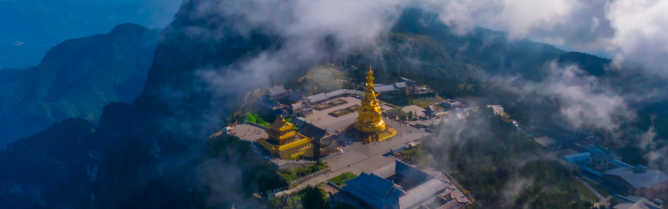
A botanical kingdom, Mount Emei displays a complete vertical vegetation spectrum from subtropical to frigid zones, hosting over 3,000 species of higher plants, including the precious dove tree. Wildlife is abundant, with troops of Tibetan macaques along the trails being a famous sight. Buddhist heritage spans a millennium, with about 30 temples remaining; their ancient architecture reflects the Sinicization of Buddhism. Notable temples include Baoguo, Wannian, and Huazang (Golden Summit). The Golden Summit dazzles with its Ten Directions Samantabhadra Statue, sunrise, sea of clouds, and Buddha’s Halo (an optical phenomenon).
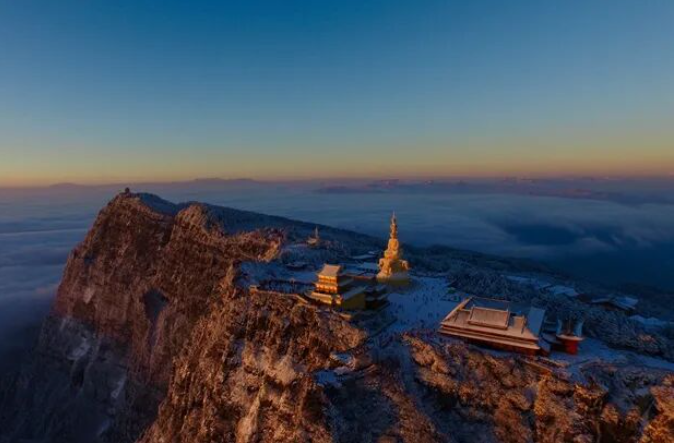
Visitors can hike or combine transport with walking. The classic hiking route starts from Baoguo Temple, passes through Qingyin Pavilion, Hongchunping, and Xixiang Pond to the Golden Summit, taking 2–3 days—a test of endurance that immerses one in the mountain’s essence. An easier option is to take a bus to Leidongping, then a cable car to the summit. The Giant Buddha Temple at the base and the nearby Leshan Giant Buddha are must-sees. Best visiting periods are spring (April–May for azalea blooms) and autumn (September–October for clear skies). When encountering monkeys, keep a safe distance and avoid feeding or provoking them.