


Songshan Mountain in Dengfeng, Henan, consists of Taishi Mountain (main peak Junji Peak, 1,492 meters) and Shaoshi Mountain. It is not only the Central Peak of the Five Sacred Mountains but also the physical center of China’s traditional cosmological and ritual culture. In 2010, the “Historic Monuments of Dengfeng in the Centre of Heaven and Earth” were inscribed as a UNESCO World Heritage site.
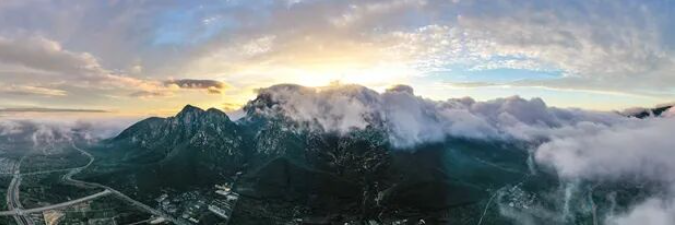
Geologically, Songshan Mountain is known as “five generations together,” exposing rock layers spanning 3.5 billion years—a natural geological textbook. Yet its greatest brilliance lies in its unparalleled cultural accumulation. It is a convergence of Confucianism, Buddhism, and Taoism: Shaolin Temple is the cradle of Chan Buddhism and Chinese martial arts; Zhongyue Temple is the largest Taoist complex among the Five Sacred Mountains; Songyang Academy is one of the four great academies of the Song Dynasty, a Neo-Confucian center; and the Observatory is China’s oldest surviving astronomical structure. Together, they embody traditional Chinese cosmology and governance.
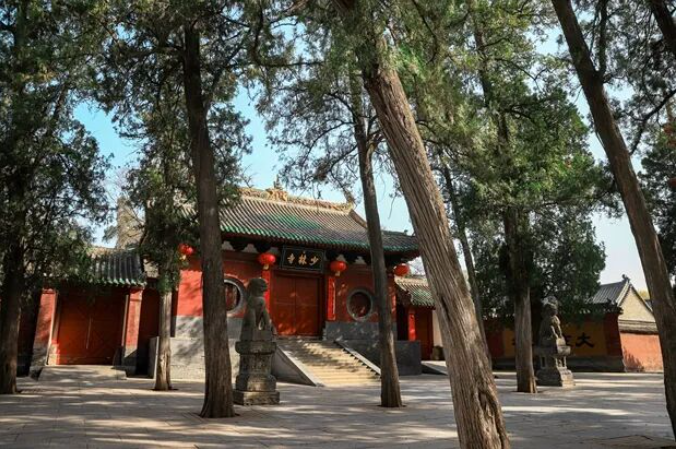
Visits typically follow three routes: Shaolin Temple Scenic Area (Shaoshi Mountain, with pagoda forest and Sanhuangzhai) focuses on martial arts and Buddhism, including performances; Zhongyue Temple, Songyang Academy, and the Observatory line (at Taishi Mountain’s base) highlight Confucian and Taoist culture and ancient science; and climbing Junji Peak on Taishi Mountain suits hiking enthusiasts. At least two days are needed for a thorough visit. Best in spring and autumn (April–May, September–October). Mount Song is easily accessible via high-speed rail to Zhengzhou or Luoyang, then bus to Dengfeng.