


At 4,158 meters, the Jungfrau is the crowning jewel of the Bernese Alps in Switzerland. Together with the Mönch and the Eiger, it forms the spectacular “triple peaks” skyline. Not only a renowned skiing and hiking destination in Europe, it is also legendary for the “Top of Europe” railway station at its summit—a perfect fusion of industrial engineering and natural beauty.
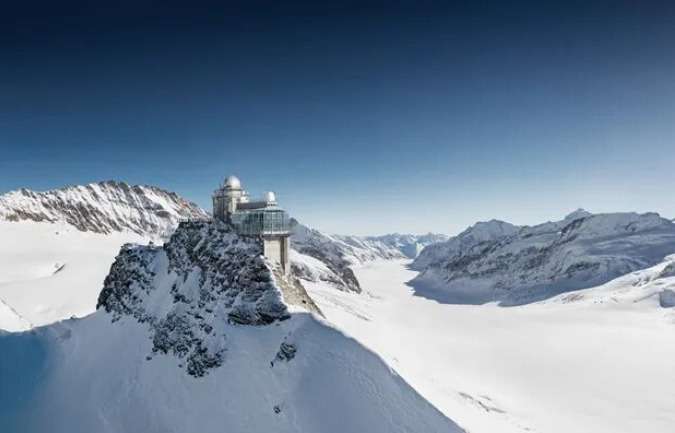
The Jungfrau region was inscribed as a UNESCO World Natural Heritage site in 2001 under “Swiss Alps Jungfrau-Aletsch.” It is home to the Aletsch Glacier, the longest in Europe at about 23 kilometers, winding like a massive ice river between the mountains. Beyond the breathtaking scenery, the Jungfrau Railway is a celebrated feat of engineering. Completed in 1912 after 16 years of tunneling through rock, this cogwheel train climbs to the Jungfraujoch station at 3,454 meters—the highest railway station in Europe. Here, facilities like the Sphinx Observatory and the Ice Palace allow visitors to easily reach the snow-capped peak and enjoy a 360-degree panoramic view of the Alps.
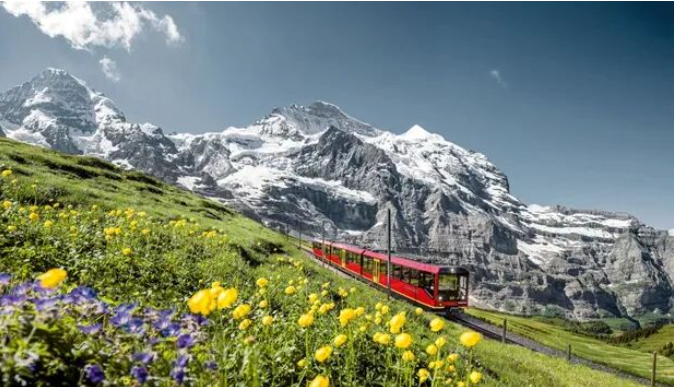
The area offers year-round experiences: winter brings world-class skiing with extensive slopes, while summer is a hiking paradise with trails ranging from gentle flower-lined paths to challenging alpine routes. Picturesque towns like Interlaken and Grindelwald at the base, with their cozy wooden chalets, serve as ideal bases for exploration. To reach the Jungfrau, travelers typically arrive in Interlaken, then take a train via Lauterbrunnen or Grindelwald to Kleine Scheidegg before switching to the Jungfrau Railway for the final ascent. The best times to visit are summer (June–September for hiking) and winter (December–March for skiing).