


The Guizhou Xingyi Wanfenglin Hiking Trail is a new IMTA International Mountain Hiking Tourism Demonstration Route added in 2023. Located in Xingyi City, Qianxinan Prefecture, Guizhou Province, it is built upon China's most beautiful karst peak forest landscape. Its core appeal lies in the "Peak Forest Pastoral Scenery + Immersive Buyi Ethnic Culture Experience." It serves as a benchmark route for mountain hiking in southwestern China and was a key promoted route at the 2023 International Mountain Tourism and Outdoor Sports Conference.
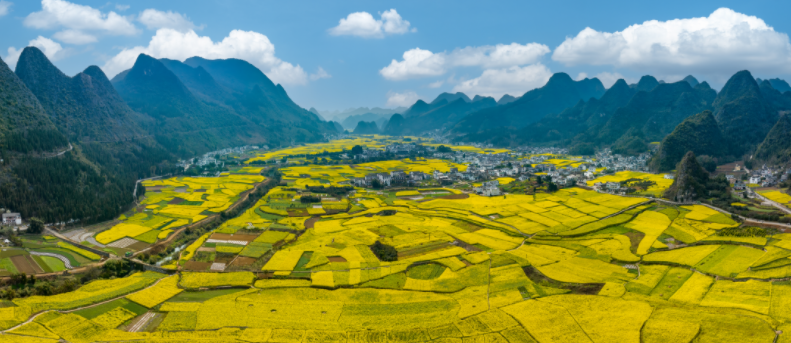
The core section spans approximately 20 kilometers, taking 3-4 hours to complete. With low difficulty and gentle terrain featuring mainly wooden boardwalks and village paths, it is suitable for hikers of all ages. The trail runs through the core scenic area of Wanfenglin, connecting iconic sights such as Bagua Tian (Eight-Diagram Field), Nahui River, and General Peak. Along the way, hikers can overlook the rolling karst peak forest, comprising over 20,000 peaks arranged in picturesque density, resembling a natural landscape painting. The winding Nahui River meanders between the peaks and farmlands; summer brings lush green rice paddies, while autumn turns them golden, complementing the Buyi ethnic villages to form a unique pastoral scenery.
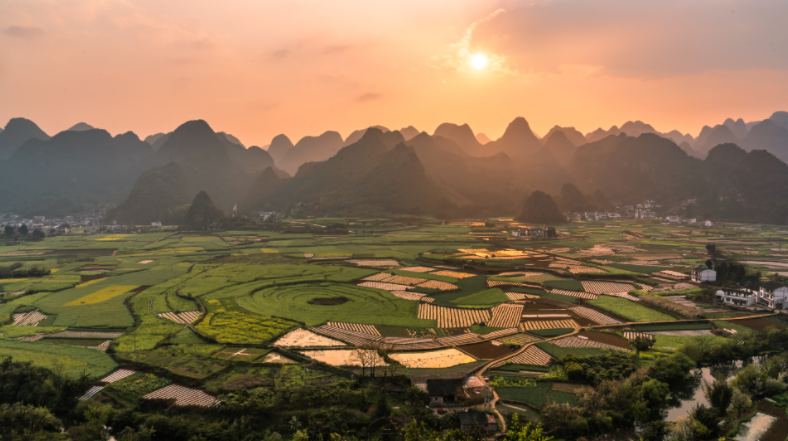
Cultural immersion is a core highlight. The trail passes through several traditional Buyi villages like Nahui Village and Shuangsheng Village, where ancient stilted houses and Buyi totemic culture are preserved. Hikers can savor local delicacies like Five-Colored Sticky Rice and the "Buyi Eight-Bowl Feast," participate in traditional crafts like batik dyeing and embroidery, and experience the hospitality of the Buyi people. The starting point at Wanfenglin Southwest Square has a tourist service center offering route planning and guide booking services. The best hiking seasons are from March to May and September to November, when the weather is mild and the pastoral scenery is richly layered, ideal for viewing the peak forest and experiencing local culture.