


Cultural Landscape · Deqin's Unique Mountain Life
As the highest-altitude county seat in Yunnan Province, Deqin is home to some of Tibet's most magnificent mountain and water scenery. Here stands Meili Snow Mountain, the foremost of the eight sacred mountains in Tibetan regions. Its main peak, Kawagebo, rises to 6,740 meters—sacred, majestic, and piercing the sky. The daily spectacle of sunrise casting golden light over the peak, with its golden radiance covering the summit in solemn grandeur, is a romance uniquely found in Deqin.
Within its borders, the imposing Baima Snow Mountain stretches in rolling ranges, while the thousand-year-old Mingyong Glacier meanders and spreads. These pristine, crystalline snow-covered landscapes create an unparalleled plateau vista.
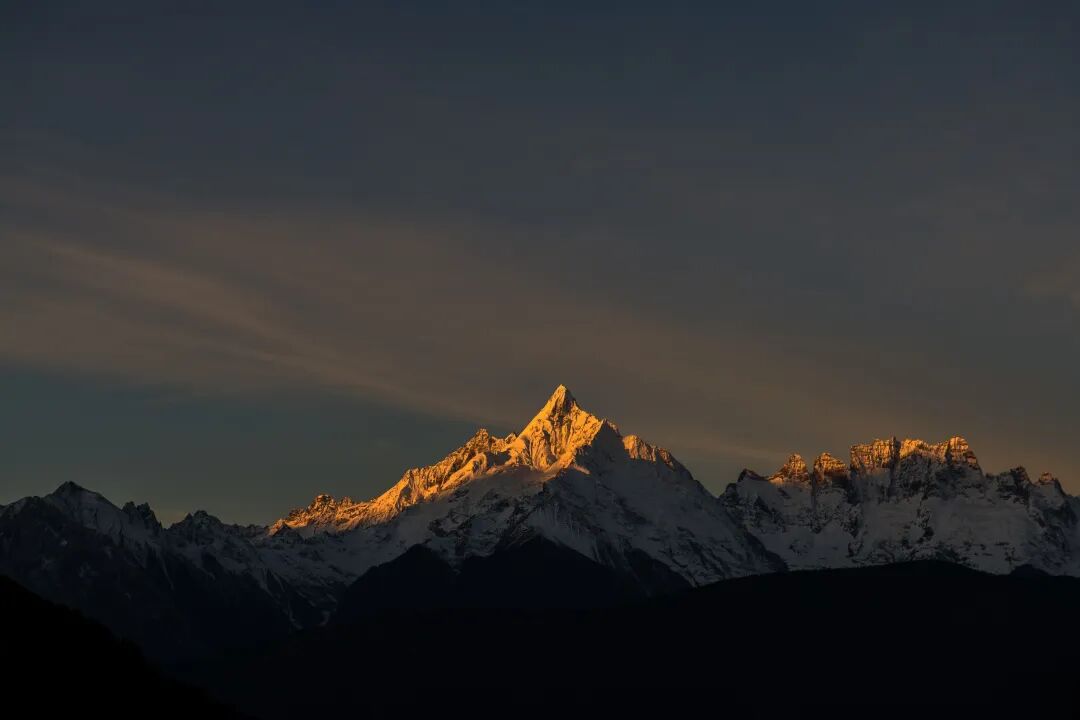
Meili Snow Mountain. Source: pexels@greece-china-news
Beyond the snowy mountain vistas, Deqin's canyon landforms are equally breathtaking. The Lancang River Meili Grand Canyon, carving deep into the earth, features sheer cliffs and surging rapids—a spectacular and awe-inspiring sight. Meanwhile, the meandering First Bend of the Jinsha River (Moon Bay) curves gracefully like a crescent moon, with mountains and waters complementing each other in gentle, distant harmony. The interplay of mountains and rivers fully reveals the majestic yet spirited character of this hidden southwestern frontier.
Hidden deep within the hinterland of Meili Snow Mountain, the village of Yubeng is inaccessible by road and isolated from the outside world, preserving an untouched paradise-like tranquility. It is the ultimate destination in the hearts of countless trekking enthusiasts.
Yubeng. Source: Diqing Culture and Tourism
Deqin is located in the northwest of Diqing Tibetan Autonomous Prefecture, Yunnan Province, on the southern edge of the Qinghai-Tibet Plateau, precisely at the junction of Yunnan, Sichuan, and Tibet, surrounded by layers upon layers of mountains. Journeying to Deqin has always been an expedition over mountains and waters. There is no airport and no railway—the only access is the winding and twisting National Highway 214.
Travelers must cross mountain ranges and traverse canyons, enduring long and bumpy journeys before glimpsing this small town perched on steep cliffs and slopes. With snow mountains as its backdrop and surrounding peaks as its walls, this town suspended on a plateau river valley holds both the world's most extreme romance and a little-known fate.
Deqin was a key ancient post station on the millennium-old Tea-Horse Road, once a vital thoroughfare for trade between Yunnan and Tibet. Through centuries of history, it has accumulated a profound and unique cultural heritage, giving this mountain town an intrinsic rustic charm. Today, the old county town features winding, crisscrossing alleys and narrow mountain roads that connect the vitality and warmth of the entire town.
Leveraging world-class natural attractions such as Meili Snow Mountain, Baima Snow Mountain, Mingyong Glacier, and the Lancang River Grand Canyon, along with the rising popularity of Yubeng Village, Deqin's cultural tourism has gained widespread recognition. Along the town's streets, specialty guesthouses, artistic and niche snow-mountain cafés, and uniquely Tibetan-style wine bars have flourished. The booming cultural tourism industry has steadily improved the economy of this remote plateau town, making life increasingly vibrant and lively.
Over four thousand permanent residents have lived here for generations, dwelling by the snow mountains and river valleys. In the morning, they open their windows to snow-capped peaks and rolling seas of clouds; at night, they look up to a sky full of brilliant stars and tranquil vastness. The simple and honest Tibetan folk customs, the old town's ancient streets, and the healing and pristine mountain scenery weave together a unique mountain lifestyle that belongs only to Deqin.
The Real Reason Deqin Is Disappearing
Yet this hidden town, with its unparalleled scenery and vibrant life, is gradually facing a fate of "disappearing." Many may wonder: with such breathtaking views and a stable life, why let this small snow-mountain town quietly fade away?
The key lies in its unique geographical environment.
Deqin sits on a narrow, steep slope within the Hengduan Mountains, along the Lancang River valley, at an altitude of 3,400 meters, surrounded by mountains on three sides with precipitous terrain—its innate geographical conditions are extremely limiting.
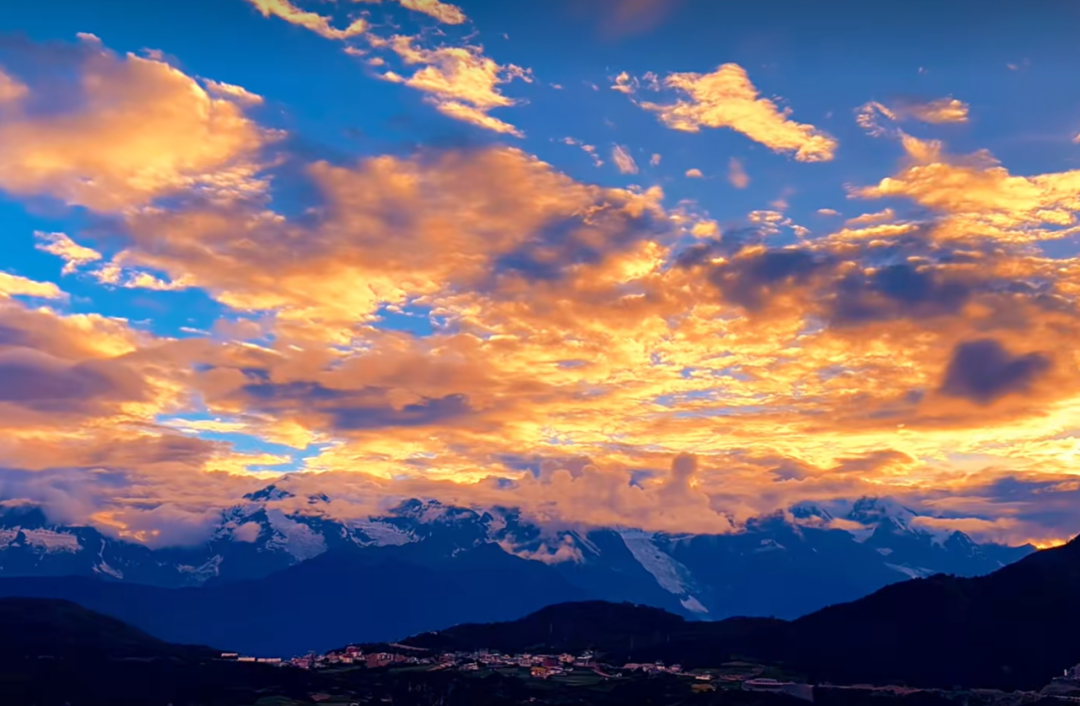
Deqin. Source: Deqin Culture and Tourism
Fatally, this land harbors numerous existential crises. The county is surrounded by 165 geological hazard sites, including landslides, collapses, and debris flows. The risks of high-altitude mountain landslides and valley debris flows remain high year-round, hanging like a sword over the heads of residents, constantly threatening the lives and property of thousands of households. The ubiquitous safety facilities and warning signs throughout the streets and alleys silently testify to the ever-present dangers of this land.
The harsh geographical environment not only poses safety risks but also severely constrains the town's development. The high-altitude, oxygen-deficient climate, combined with narrow and steep land, leaves no room for expansion, making urbanization difficult to advance. The entire region relies solely on National Highway 214 as its only external access route, resulting in poor transportation and difficult travel.
With the rise of cultural tourism, the number of outside visitors and floating populations has surged year by year. The outdated urban infrastructure, limited land resources, and harsh natural conditions can no longer meet the needs of improving residents' quality of life or promoting regional economic development. To fundamentally eliminate geological disaster risks, ensure the safety and well-being of the people, and resolve regional development challenges, Deqin initiated a comprehensive county-town relocation plan starting in 2020.
Editor Ⅰ: Zhang Congxiao
Editor Ⅱ: Zhang Wenwen
Editor Ⅲ: Pan Kaiyue