


At 4,198 meters, it is the highest peak in the Teton Range. Grand Teton is exceptionally photogenic—not because of gentle, rolling ridges, but because of its dramatic shape. A nearly vertical wall of rock rises abruptly from the valley floor, with an elevation difference of over 2,100 meters. To the east lies the Snake River Valley, flat and wide open; above, the summit is a jagged crest of black granite, draped with ancient glaciers. Seen from the valley, the entire mountain stands like an altar rising straight out of the earth—clean, sharp, and commanding.
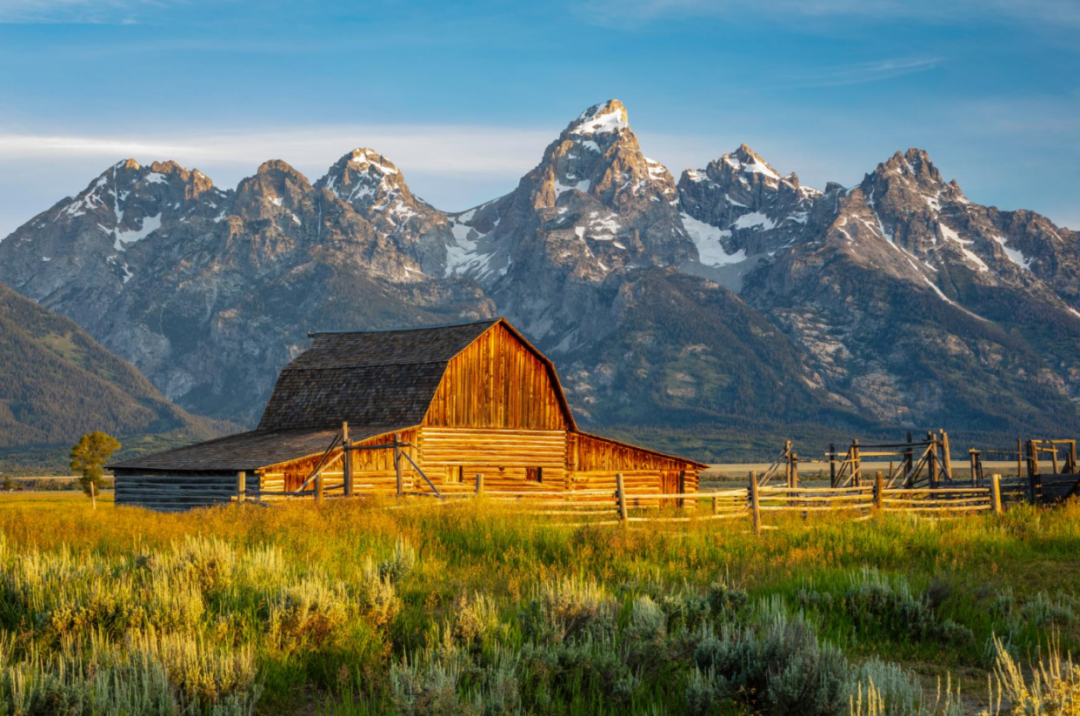
Grand Teton, Image source: Tuchong
The best place to take in this view is along U.S. Route 191 on the eastern side of the park, where six official viewpoints are located, including the famous Snake River Overlook. Many visitors set up tripods there to wait for sunrise, hoping to catch the first light striking the east face of Grand Teton—white snow, black rock, and orange dawn light all layered together in striking contrast.
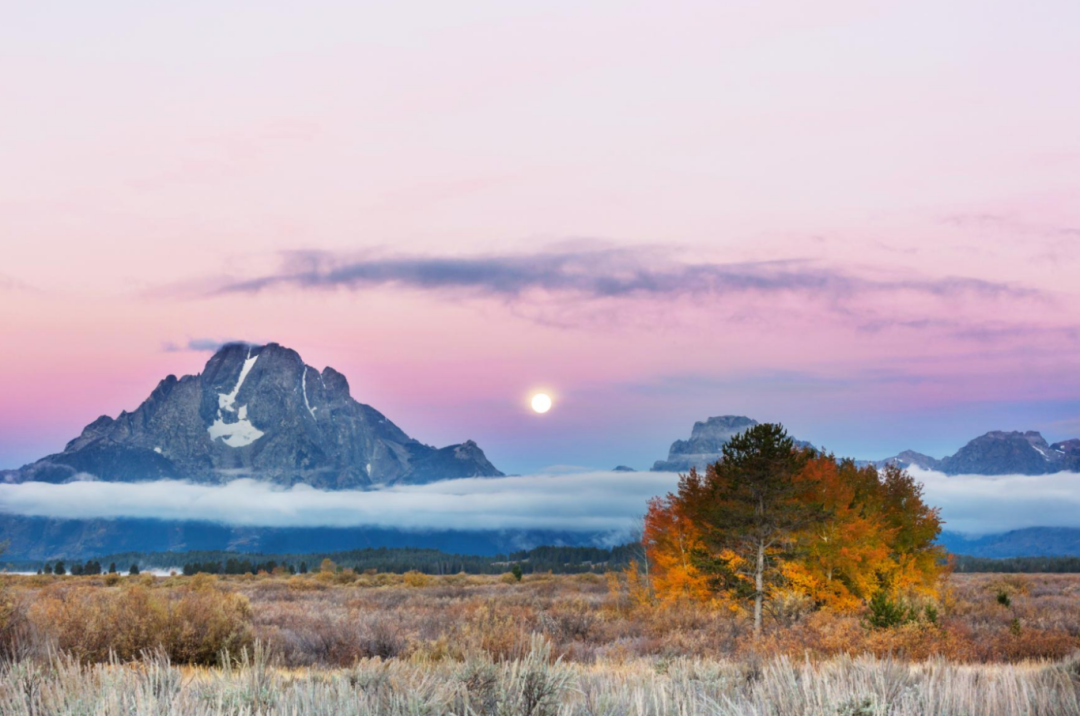
Grand Teton, Image source: Tuchong
On the southern slope of Grand Teton, twelve active glaciers remain, the largest of which—the Teton Glacier—covers an area of 10.7 square kilometers. Though smaller than the glaciers on Mount Rainier, they are still impressive for the lower 48 states. The thousand-year-old ice cap atop the peak reflects sunlight in shades of blue and white. Paired with the mirror-like reflection in Jenny Lake below, it has become a favorite subject for photographers.
Grand Teton National Park was established in 1929 and lies adjacent to Yellowstone National Park. The remarkable coexistence of volcanoes and glaciers is preserved intact here.
Editor Ⅰ: Zhang Congxiao
Editor Ⅱ: Bao Gang
Editor Ⅲ: Pan Kaiyue