


If we consider only the contiguous United States (excluding Alaska), this 4,418-meter peak is the highest point.
Mount Whitney lies on the eastern side of the Sierra Nevada. Its western slope is part of the mountain range's rolling terrain, while its eastern side is a sheer cliff. Below that cliff lies Death Valley—the lowest point in the contiguous U.S., at 86 meters below sea level. The straight-line distance from the lowest point to the highest is less than 200 kilometers. Standing atop Mount Whitney and looking east, you can theoretically see the continent's extreme elevations in a single glance.
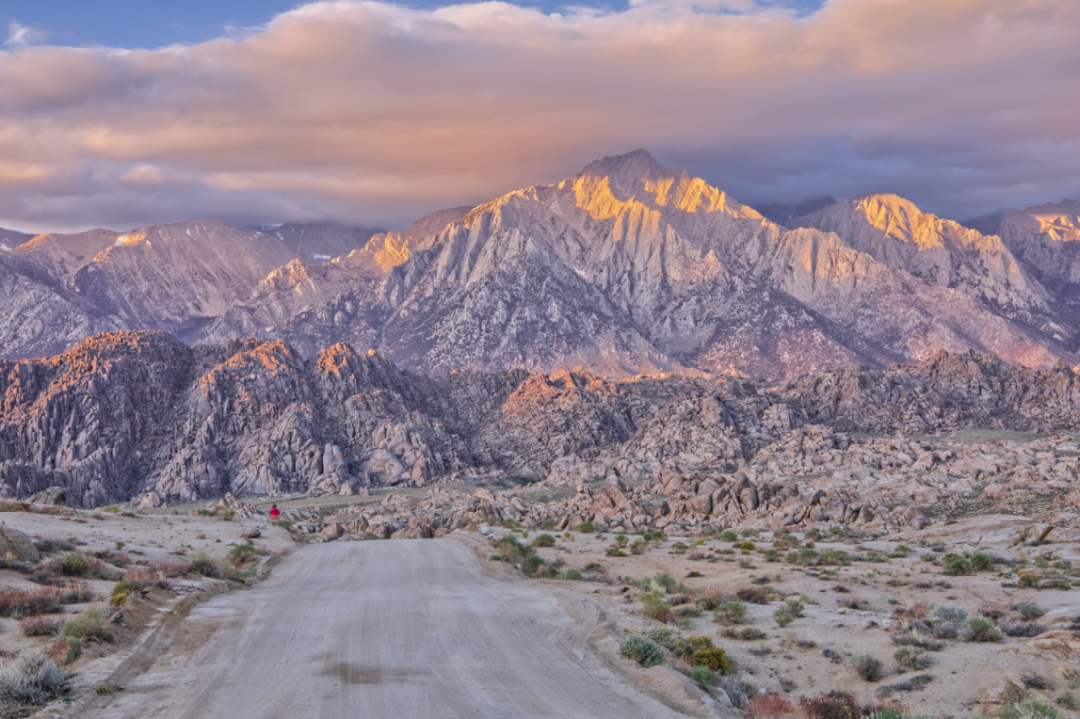
Mount Whitney, Image source: Tuchong
In 1864, Joseph Whitney of the California Geological Survey discovered the mountain and named it after himself. Nine years later, three locals made the first known ascent. Among them was Charles Begole, who later earned a place in mountaineering history as "the guide of John Muir of the Mountains."
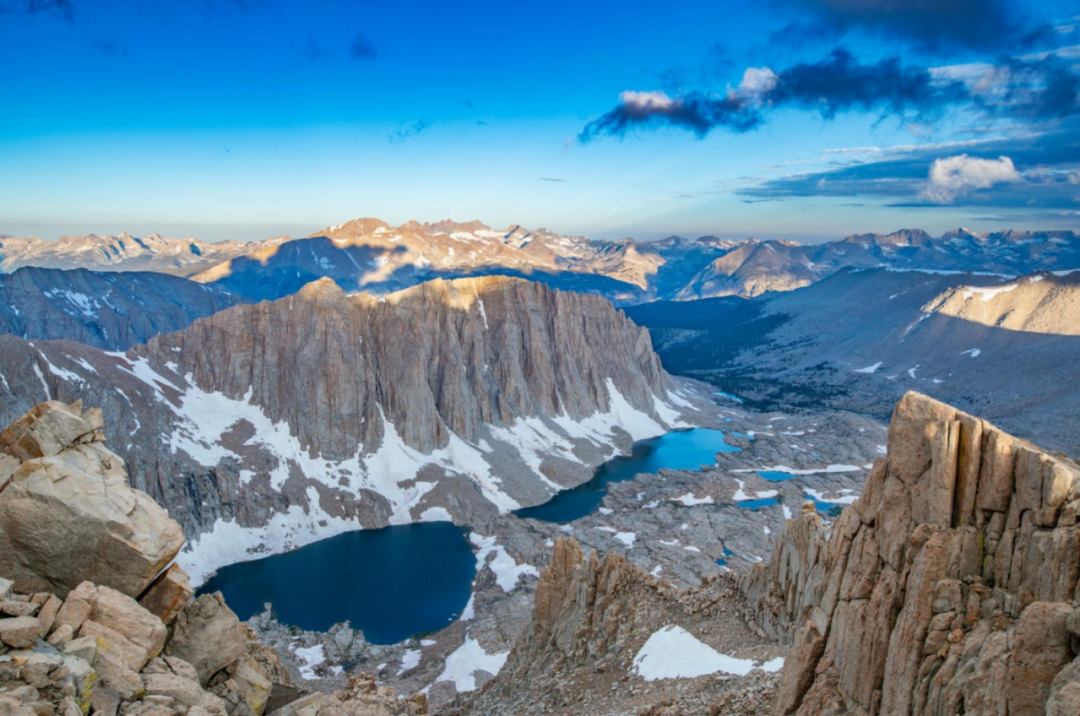
Mount Whitney, Image source: Tuchong
Mount Whitney is connected by a long-distance trail that runs through the Sierra Nevada: the John Muir Trail. This trail does not actually go to the summit, but it is nonetheless famous. Stretching approximately 356 kilometers from Yosemite Valley to the base of Mount Whitney, the trail takes two to three weeks to complete and crosses multiple passes over 3,000 meters. Named after John Muir, a pioneer of the American conservation movement, it is considered one of the greatest long-distance hiking routes in the United States.
The Alabama Hills at the foot of Mount Whitney tell a different story. This landscape of granite boulders and rocky wilderness has served as the backdrop for over 300 Hollywood films, including Iron Man and Transformers: Revenge of the Fallen. Western film directors were drawn to its desolate beauty. Towering rocks stand on barren ground, looking almost like an alien planet—unique, atmospheric, and unforgettable.
Editor Ⅰ: Zhang Congxiao
Editor Ⅱ: Bao Gang
Editor Ⅲ: Pan Kaiyue