


On the same list, there is the 19th-century mansion of a wealthy overseas Chinese merchant on one side, and a 21st-century immersive rainforest experience on the other. The charm of Singapore lies precisely in its ability to place these two utterly different things on the same island without any sense of incongruity. It does not require travelers to deliberately seek out attractions, because every district tells its own story, and the stories are only a few MRT stops apart.
From Chinatown to Little India: Don't Rush to Marina Bay Just Yet
Many people's first impression of Singapore comes from Marina Bay. Marina Bay Sands, the Supertrees, and the light shows are indeed visually stunning, but they only represent Singapore's "cover." What truly gives the city flesh and blood are the communities beneath that cover.
Chinatown was the landing point for early Chinese immigrants. The old shophouses are painted in various colors, the temples have never stopped burning incense from morning to night, and around the corner are boutique stores selling cold brew coffee. The best area to walk is around Pagoda Street and Smith Street, where old-style hardware shops and traditional Chinese medicine halls still remain, and the air carries a scent of herbs mixed with coffee.
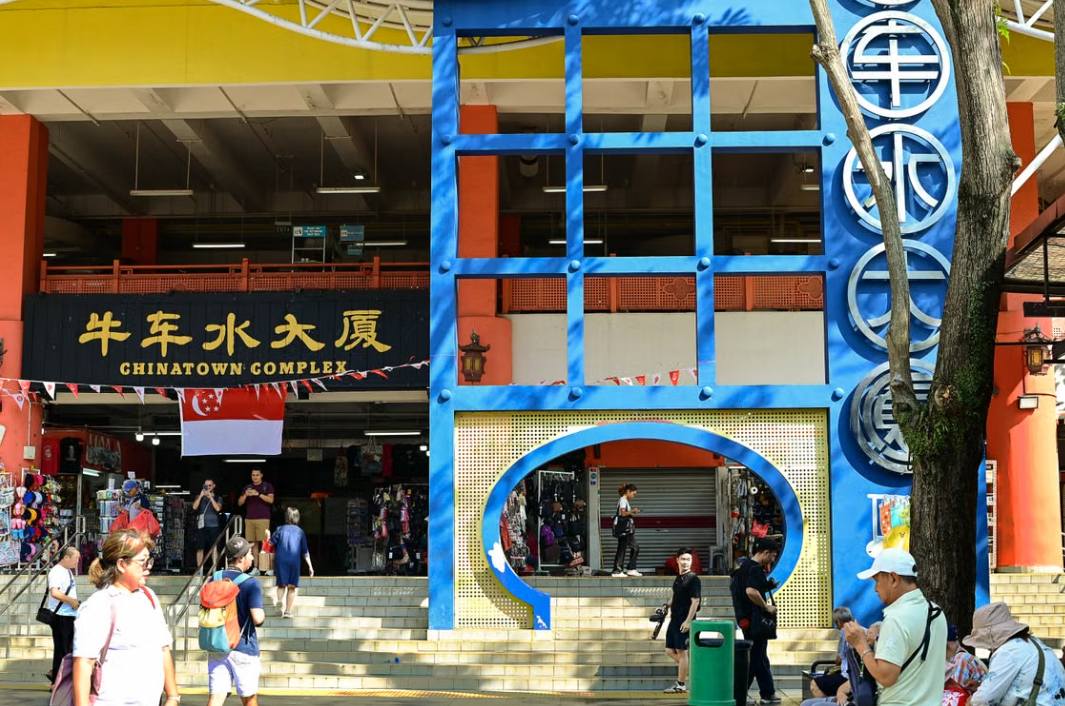
Chinatown. Source: pexels.com@Kenny Foo
A few MRT stops from Chinatown brings you to Little India. Serangoon Road is the main artery of the entire area, with shops playing Bollywood music from morning to night, and garland shops hanging strings of jasmine and marigolds at their doorways. Mustafa Centre is a 24-hour Indian department store where you can find everything from spices to gold jewelry, from saris to phone cases. If you happen to visit during Deepavali, the entire street is covered in colorful lights and oil lamps. In 2026, Deepavali falls on November 8, a Sunday, with the following day as a public holiday, so Little India will enjoy an especially lively long weekend. The Land Transport Authority has also partnered with the Little India Shopkeepers and Heritage Association this year to decorate MRT carriages and some buses with Deepavali decorations. In the weeks leading up to the festival, there are woodblock printing and traditional dance experiences near Little India MRT station on weekends.
Further north is Kampong Glam. The golden dome of the Sultan Mosque is the landmark of this area, surrounded by Arab Street and Bussorah Street. Arab Street's fabric shops and perfume stores are packed together, while Bussorah Street concentrates carpets, lamps, and handicrafts. For those who like independent designers, a few steps east brings you to Haji Lane, a narrow alley full of graffiti walls and small shops—good for photos by day, drinks by night.
Walking through these three neighborhoods together takes about half a day. There's no need to plan a route deliberately; start from Chinatown, head north along North Bridge Road, and stop wherever you like. Singapore's neighborhoods don't need "check-ins"—they are daily life itself.
Lau Pa Sat and Hawker Centres: One Plastic Table, Four Cuisines
After finishing Kampong Glam, head south back to Marina Bay. Marina Bay Sands and the Supertrees are right there, but lunch is not there. Walk ten minutes west, and you reach Lau Pa Sat.
Lau Pa Sat was built in 1894, originally a wet market, later converted into a food centre. The cast-iron structure itself has a sense of history, but what truly makes it special is Satay Street. From evening onward, seven or eight satay stalls set up charcoal grills along the street, smoke curling into the air, with people in suits and people in flip-flops squeezed around the same plastic table. Order ten sticks of chicken, ten sticks of beef, a plate of peanut sauce, and a glass of sugarcane juice—that's a meal.
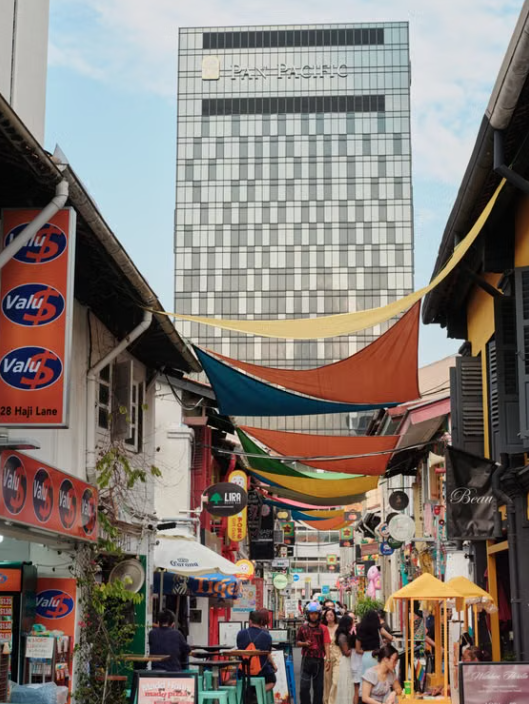
A market in Singapore. Source: pexels.com@CK Seng
But Singapore's "eating" is not limited to Lau Pa Sat. In 2020, Singapore's hawker culture was inscribed on UNESCO's Representative List of the Intangible Cultural Heritage of Humanity. This is not "food" being recognized, but "the way of eating" being recognized.
The origins of hawker centres can be traced back to the early 19th century. Chinese, Malay, and Indian immigrants came to Singapore and pushed carts through the streets selling the flavors of their hometowns to make a living. Starting in 1968, the government began systematically planning hawker centres, inviting mobile street vendors into indoor spaces equipped with water, electricity, and waste disposal facilities. This decision was originally intended to solve urban management problems, but it unexpectedly shaped a unique public space: people of different races and different incomes sitting at the same plastic table to eat.
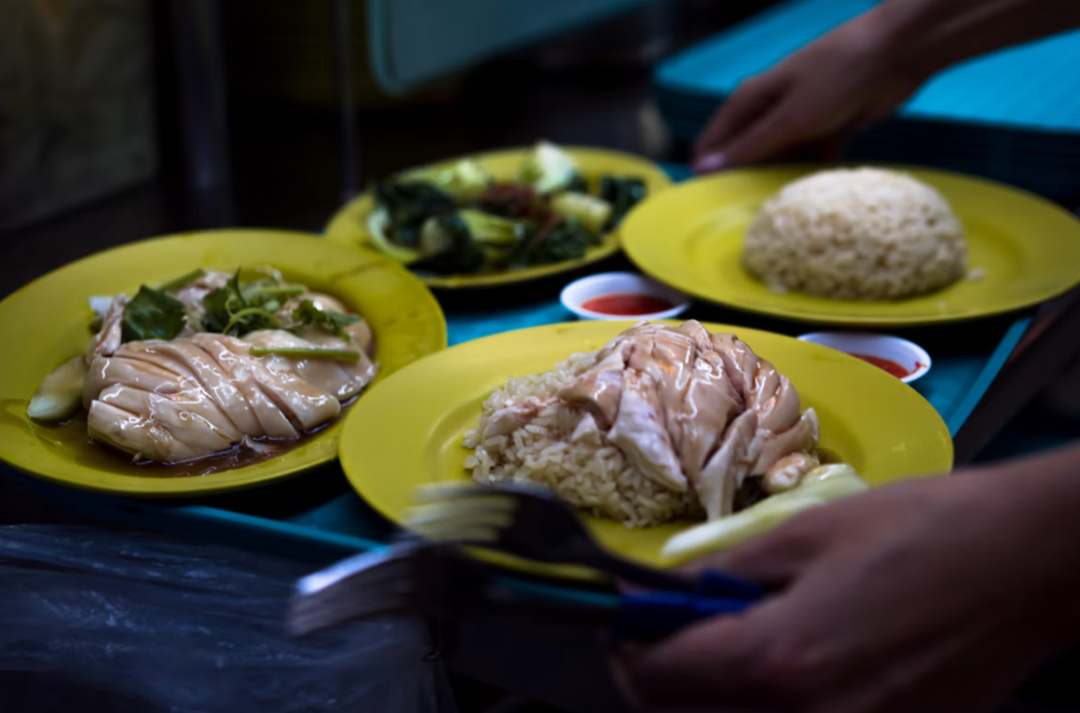
Hainanese chicken rice can be found in every food centre, but there is a big difference between well-made and mediocre. Good chicken rice has silky, tender chicken—even the breast meat isn't dry—with a layer of crystalline chicken aspic on the outside. The essence is the rice, which absorbs chicken fat and stock, each grain distinct and fragrant, paired with a special garlic chili sauce that makes you keep eating. A chicken rice set costs about 5 Singapore dollars; the queue starts at ten in the morning, and when it's sold out, the stall closes.
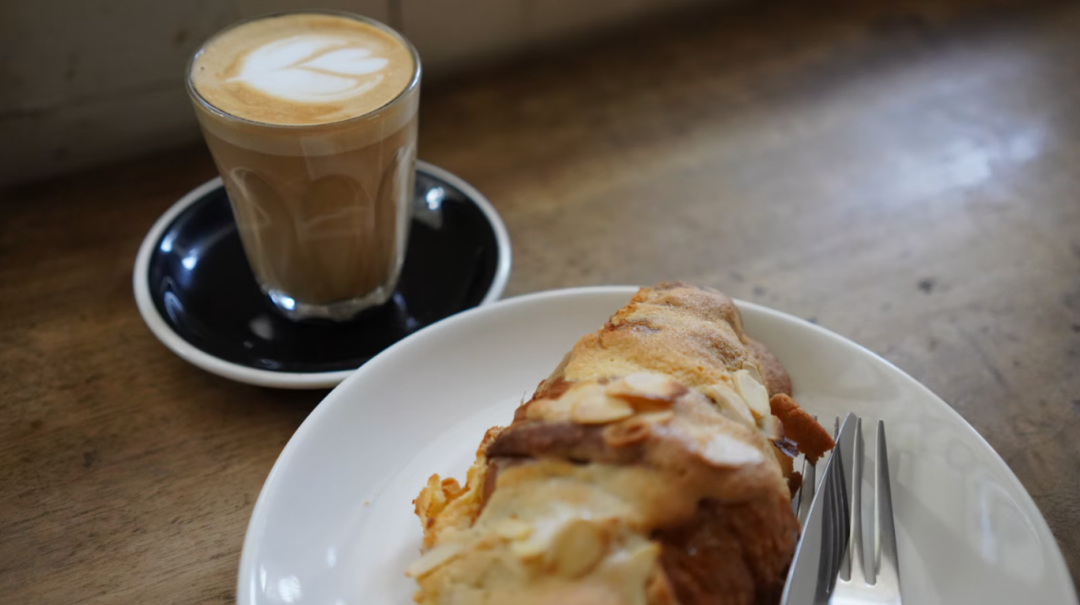
In Singapore's culinary landscape, besides the steaming Hainanese chicken rice in food centres, there is another slower rhythm belonging to mornings and afternoon tea. A cup of coffee with delicate latte art, paired with a golden, crispy almond toast, is an everyday sight in the independent cafés where local young people gather. Singapore's coffee and bakery culture actually presents an interesting "duality." In old-style coffee shops, it's all about traditional Nanyang coffee and kaya toast; in neighborhoods like Tiong Bahru or Haji Lane, Western-style bakeries and specialty coffee shops have long flourished.
Coffee and almond toast. Source: unsplash.com@J Torres
In the 2026 Michelin Bib Gourmand list, a total of 97 eateries in Singapore are included, and hawker centres remain a focus of the reviewers' attention. Newton Food Centre leads with 6 Bib Gourmand recommendations, while Amoy Street Food Centre and Hong Lim Market and Food Centre each have 4. This means that without spending a lot of money, sitting down at any food centre, you might stumble upon a taste that has been recognized by Michelin.
Haji Lane, rich in food options. Source: pexels.com@CK Seng
Singaporeans call hawker centres "community dining rooms." This is not a metaphor; it is a fact.
Editor Ⅰ: Zhang Congxiao
Editor Ⅱ: Zhang Wenwen
Editor Ⅲ: Liu Guosong