

Editor's Note: On November 11, the International Conference of Mountain Tourism and Outdoor Sports (MTOS) 2025 commenced in Guiyang City, Guizhou Province. With the continued theme "Integration of Culture, Tourism and Sports Presents a High Quality Life," this year's Conference featured a series of events including the International Mountain Tourism Alliance (IMTA) Annual Conference 2025, the International Mountain Tourism Promotion Conference 2025, a Field Trip to Guizhou Mountain Tourism Destinations, and the Bank of Guizhou·Mountain Culture, Tourism and Outdoor Sport Equipment Exhibition. Over 350 participants gathered, including representatives from international organizations, government and tourism departments of relevant countries, diplomatic missions in China, tourism-related enterprises, mountain tourism destination management agencies, experts, scholars, and media from more than 30 countries and regions. They explored new pathways for the integrated development of "Mountain Tourism +", shared new achievements in mountain tourism development, and worked together to build a prosperous new future for mountain tourism. Kumar Mani Thapaliya, President of the Nepal Association of Tour & Travel Agents, made a presentation at the 2025 International Mountain Tourism Promotion Conference.
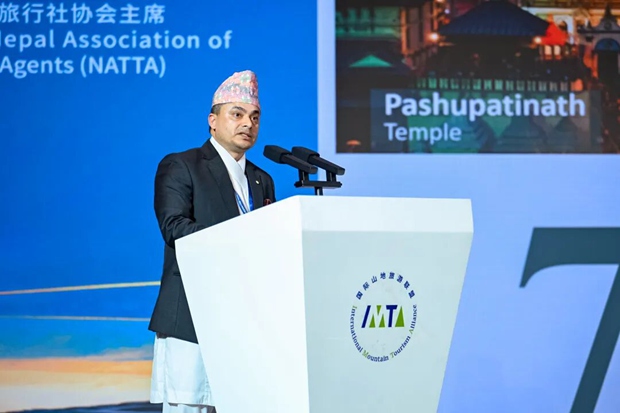
The following is the full text of the presentation:
Distinguished leaders, excellencies, colleagues, ladies and gentlemen, good afternoon!
It is a great honour to join you as President of the Nepal Association of Tour and Travel Agents (NATTA) and Executive Board Member of the Nepal Tourism Board at this International Conference of Mountain Tourism & Outdoor Sports and the IMTA Annual Conference in Guiyang.
This conference, under the theme “Integration of Culture, Sports, and Tourism for a High-Quality Life,” comes at the right time to explore how mountain destinations can grow responsibly and sustainably.

This year is special for both Nepal and China as we celebrate 70 years of diplomatic relations—a friendship built on respect, cultural connection, and our shared love for the Himalayas. The mountains connect our nations—geographically, economically, and spiritually.
NATTA has been proud to serve as a Council Member of IMTA since its early days. Through IMTA, we have strengthened partnerships, exchanged best practices, and promoted higher standards for sustainable mountain tourism.

Lake Rara - Bharatbandhu Tapa
Nepal, home to eight of the world’s fourteen highest peaks, represents both natural beauty and cultural depth. Our vision is simple: protect our peaks, empower our people, and offer visitors authentic and meaningful experiences.
We invite partners worldwide to collaborate with us in responsible trekking, mountain sports, heritage circuits, and community-based tourism that ensures real benefits for local people.
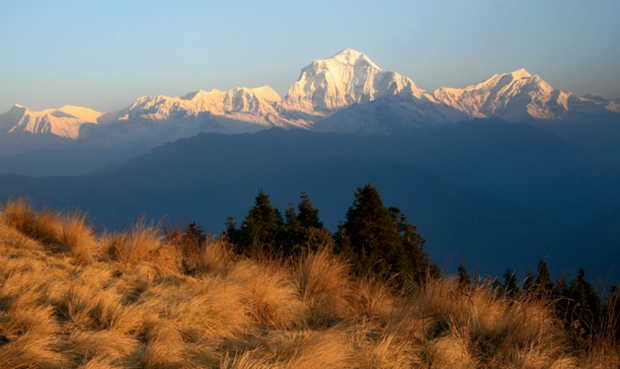
Annapurna, Nepal
We are grateful to IMTA for recognising Nepal’s contributions:
- Annapurna I, honoured last year for its global mountaineering reputation.
- The Mundum Trail, recognised this year for its rich culture, biodiversity, and soft-adventure potential.
These recognitions inspire us to keep improving safety, sustainability, and community-based tourism.
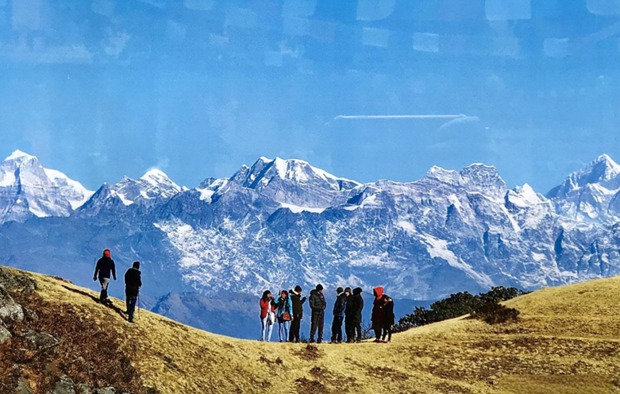
Mundhum, Nepal
Allow me to highlight three key directions for the future of mountain tourism:
- 1.Integrating culture, sport, and nature
- Nepal’s new tourism products blend adventure with heritage, festivals, food, and crafts—creating experiences that are both exciting and people-centred.
- 2.Investing in safety, skills, and standards
- NATTA, together with the Nepal Tourism Board, TAAN, and NMA, is working with partners to strengthen safety measures, improve professional training, and share knowledge through networks such as IMTA, PATA, and the Mountain Partnership.
- 3.Building climate resilience and community value chains
- Our mountains stand on the front line of climate change. Melting glaciers and changing weather patterns threaten both lives and livelihoods. That is why we promote renewable energy in lodges, waste-smart trails, and fair opportunities for local producers.
Mountain tourism must lead the way in climate action—protecting nature while creating opportunity for local communities.

Everest Base Camp, Nepal, Himalayas. Photo by Thie Suzuki
Nepal offers year-round diversity—from Himalayan expeditions to mid-hill wellness retreats and winter trail sports. Our living cultures, cuisine, and architecture turn every journey into a learning experience.
We are ready to work with Chinese and international partners, investors, and institutions to enhance the quality and sustainability of mountain tourism.
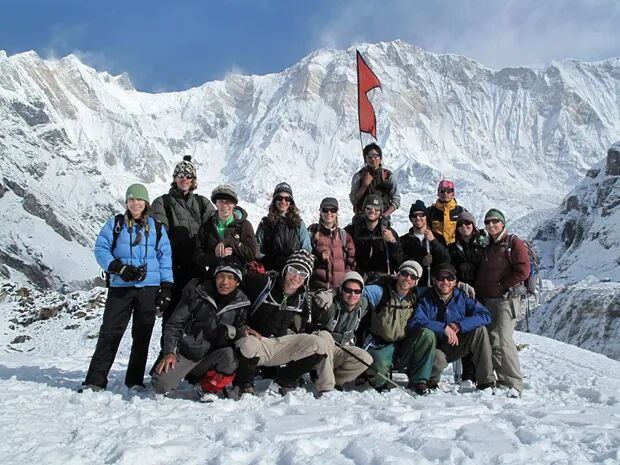
Annapurna, Nepal. Image credit: NATTA
In this respected forum, I propose that IMTA and its partners develop joint initiatives connecting mountain sports, culture, research, and youth exchanges—rotating between Nepal, China, and other IMTA member countries. This will strengthen people-to-people ties, share knowledge, and promote collective growth.
We also encourage IMTA to consider a Mountain Livelihoods Accelerator with the Mountain Partnership—supporting guides, homestays, and eco-agri tourism that directly benefits local communities.
Together, let us build a future where mountain tourism becomes a model of sustainability, cooperation, and shared prosperity—where visitors travel responsibly, communities thrive, and the environment remains protected.
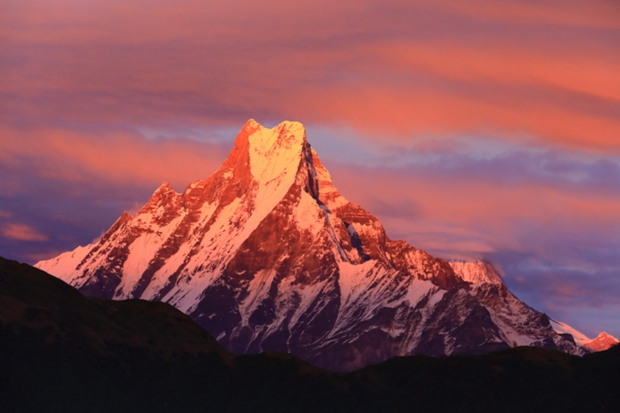
Machhapuchhre (Fishtail Mountain), Nepal
As Nepal and China celebrate 70 years of friendship, we renew our shared commitment to a safe, sustainable, and inclusive mountain future.
On behalf of Nepalese tourism industry, I warmly invite all of you to visit Nepal—not only to see the mountains, but to connect with the people who call them home.
Before I conclude, I would like to share a short video that captures the beauty of Nepal and its offering. Thank you.
Source: Nepal Association of Tour and Travel Agents & Nepal Tourism Board
All other images and text source: IMTA, unless otherwise specified
Editor Ⅰ: Zhang Wenwen
Editor Ⅱ: Bao Gang
Editor Ⅲ: Liu Guosong