

Editor's Note: On November 11, the International Conference of Mountain Tourism and Outdoor Sports (MTOS) 2025 commenced in Guiyang City, Guizhou Province. With the continued theme "Integration of Culture, Tourism and Sports Presents a High Quality Life," this year's Conference featured a series of events including the International Mountain Tourism Alliance (IMTA) Annual Conference 2025, the International Mountain Tourism Promotion Conference 2025, a Field Trip to Guizhou Mountain Tourism Destinations, and the Bank of Guizhou·Mountain Culture, Tourism and Outdoor Sport Equipment Exhibition. Over 350 participants gathered, including representatives from international organizations, government and tourism departments of relevant countries, diplomatic missions in China, tourism-related enterprises, mountain tourism destination management agencies, experts, scholars, and media from more than 30 countries and regions. They explored new pathways for the integrated development of "Mountain Tourism +", shared new achievements in mountain tourism development, and worked together to build a prosperous new future for mountain tourism. Giorgio Grussu, Project Coordinator, Mountain Partnership Secretariat – FAO, delivered the opening address at the 2025 International Mountain Tourism Promotion Conference.
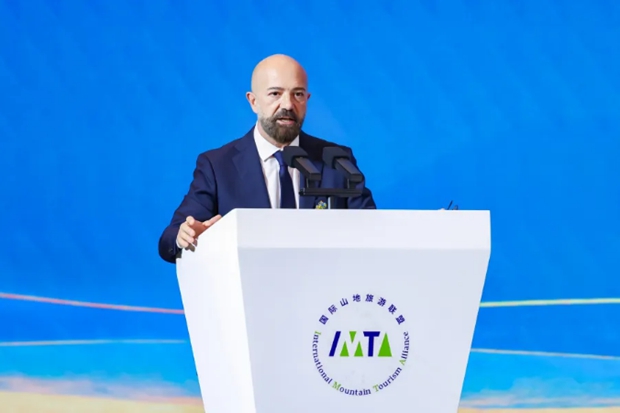
The following is the full text of the speech:
Distinguished guests, Ladies and gentlemen, Friends of mountains,
It is a pleasure to be here today on behalf of the Mountain Partnership Secretariat, hosted by the Food and Agriculture Organization of the United Nations, the lead UN agency for mountain issues.
I would like to thank the International Mountain Tourism Alliance for this opportunity and for organizing such an important event on sustainable mountain tourism and outdoor sports.
We are honoured to have IMTA as a valued member of the Mountain Partnership.
The Mountain Partnership was established 23 years ago as the only United Nations alliance dedicated to the sustainable development of mountain regions worldwide.
Today, it brings together nearly 700 members, serving as a multistakeholder platform for collective advocacy, knowledge exchange and action.

Mount Huangshan in China
Mountains are recognized as some of the most important and vulnerable ecosystems Earth.
They provide freshwater to nearly half of humanity, yet they are also at risk of collapse due to climate change, glacier retreat, pollution and land degradation.
These challenges disproportionately affect mountain communities already facing poverty, food insecurity and limited access to basic services.
The Mountain Partnership tries to convey that these issues are not only about people living in mountain regions, but about the entire planet.
Mountains support the livelihoods of 1.2 billion people whose knowledge and traditions have shaped these landscapes for centuries.
Mountain farmers have long demonstrated extraordinary ingenuity, cultivating diverse crops at different altitudes, practicing agroforestry and terracing slopes to preserve soil and water while reducing disaster risks.
Our role is to raise awareness of the need to support mountain communities in adapting to ongoing changes, especially small-scale mountain producers in low- and middle-income countries, where family farming is the main livelihood source.
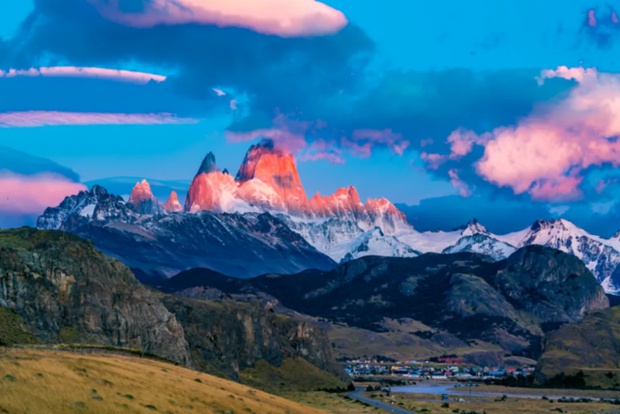
Mount Fitz Roy in Argentina
Smallholder mountain producers face significant challenges: low production volumes, long value chains, and prices that rarely reflect the real value of their work.
This puts traditional practices at risk of being lost, and can increase outmigration of men and youth.
Recent data from the forthcoming FAO publication Mountain Demographics and Trends, to be launched at COP30, shows a profound shift in settlement patterns: between 2000 and 2030, the share of people living in rural mountain areas will fall from 40 to 33 percent, while urban populations will continue to grow.
This underlines the urgency of investing in mountain livelihoods.
With the support of our donors – Italy, Switzerland, Ireland and Andorra – we are helping mountain communities strengthen their economies and promote high-quality, low-impact mountain products.
Agriculture and tourism are two key entry points for this. Both are vital to mountain economies – and both can create income while protecting fragile ecosystems, agrobiodiversity and cultural heritage.

Lauterbrunnen Valley in Switzerland
When managed sustainably, tourism supports diversifying rural livelihoods, celebrates local culture and contributes to conservation.
However, mass tourism can erode cultural values. This is why culturally sensitive, low-impact models are needed to ensure long-term benefits.
Engaging women, youth and Indigenous Peoples is also essential; more than 50 percent of women in mountainous regions carryout agricultural activities.
Our projects focus on the synergy between sustainable tourism and sustainable agrifood systems by:
- Linking farmers with tourism operators;
- Providing technical support to small-scale producers;
- Preserving local cuisine and traditional products; and
- Raising awareness among visitors about their impact on fragile ecosystems.
In collaboration with UN Tourism, we are implementing the “Food and Tourism Itineraries” initiative across seven Pacific Small Island Developing States.
These itineraries connect sustainable agriculture with local gastronomy, creating opportunities for small-scale producers while raising awareness of the need to protect fragile ecosystems.
Thanks to this initiative, six Pacific Island countries have joined the Mountain Partnership through their Ministries of Tourism – a clear recognition that the challenges faced by mountains and islands are deeply connected, and that only by working together can we build truly resilient and sustainable communities.
Reliable data are also essential – to understand visitor flows, guide infrastructure planning, and shape policies that ensure tourism truly benefits local communities.
By strengthening data collection and analysis, we can enable mountain tourism to become more sustainable, accessible and inclusive, leaving no one behind.
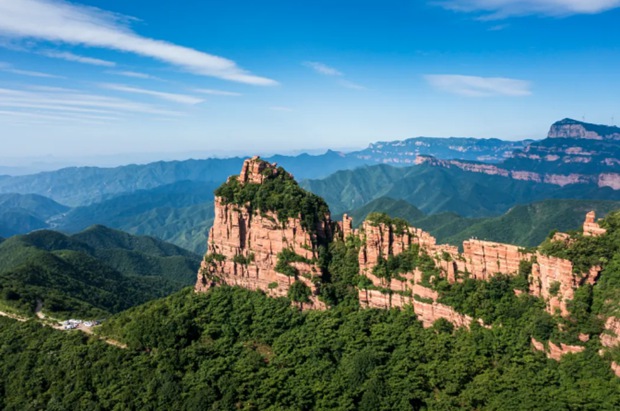
Zhangshiyan in China
Finally, every four years Mountain Partnership members gather to shape the alliance’s future direction.
The next Global Meeting will take place from 26 to 28 March 2026 in Andorra, under the theme “Mountains for the Future: Responsible Tourism, Thriving Communities.”
It will provide an important platform to exchange best practices, promote responsible tourism, and strengthen collaboration for sustainable mountain development.
From the mountains to the islands, our challenges are shared – and so is our responsibility.
The Mountain Partnership is open to all those who believe that mountain communities deserve a stronger voice on the global stage.
I invite you to join us, to join forces, and to help ensure that the beauty and resilience of the world’s mountains continue to inspire and sustain generations to come. Thank you.
Image and text source: IMTA
Editor Ⅰ: Zhang Wenwen
Editor Ⅱ: Bao Gang
Editor Ⅲ: Liu Guosong