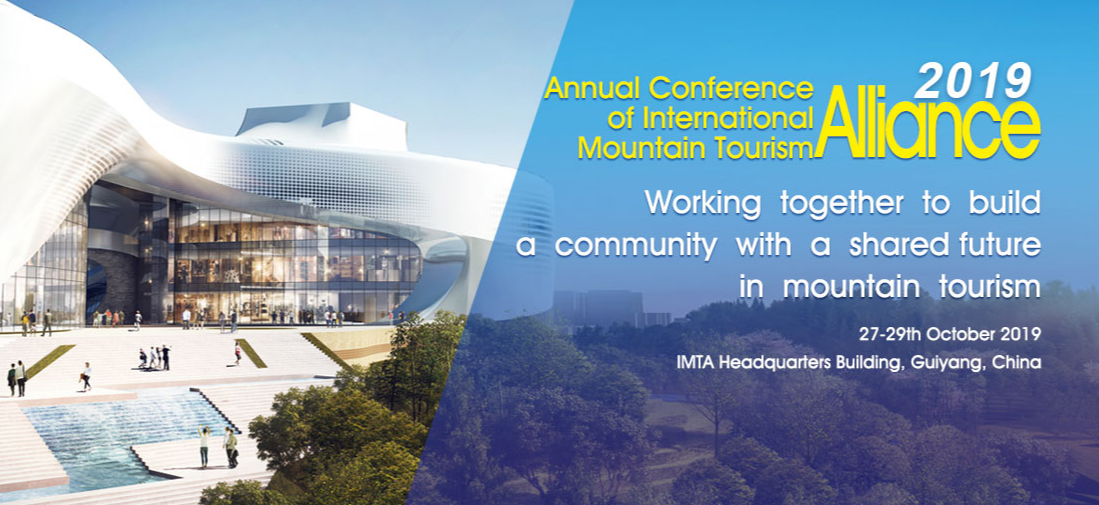


Editor's Note: On November 11, the International Conference of Mountain Tourism and Outdoor Sports (MTOS) 2025 commenced in Guiyang City, Guizhou Province. With the continued theme "Integration of Culture, Tourism and Sports Presents a High Quality Life," this year's Conference featured a series of events including the International Mountain Tourism Alliance (IMTA) Annual Conference 2025, the International Mountain Tourism Promotion Conference 2025, a Field Trip to Guizhou Mountain Tourism Destinations, and the Bank of Guizhou·Mountain Culture, Tourism and Outdoor Sport Equipment Exhibition. Over 350 participants gathered, including representatives from international organizations, government and tourism departments of relevant countries, diplomatic missions in China, tourism-related enterprises, mountain tourism destination management agencies, experts, scholars, and media from more than 30 countries and regions. They explored new pathways for the integrated development of "Mountain Tourism +", shared new achievements in mountain tourism development, and worked together to build a prosperous new future for mountain tourism. He Yafei, IMTA Vice Chairman & Secretary-General, delivered the opening address for the Conference.

The following is the full text of the speech:
Distinguished guests, colleagues, good day. On the occasion of the International Mountain Tourism Alliance’s 2025 Annual Conference, we assemble with culture and tourism as our unifying bridge and people’s well-being as our guiding principle, to deliberate on the profound theme of integrating cultural and tourism development to foster high-quality living. In contemporary times, cultural-tourism integration has emerged as a pivotal driver of global progress, its deepened advancement underpinned by four fundamental pillars that demand targeted endeavors and multi-faceted empowerment.
Cultural-Tourism Integration: Precision, Synergy, and Transformative Impact
Enriching Connotations to Elevate Experiences: Culture constitutes the very soul of tourism; only by anchoring development in cultural heritage can travel experiences attain genuine depth and resonance. In Guizhou, the "Village Song" IP of Qiandongnan’s Liping County has garnered over 2 billion cumulative online impressions, while Anshun Longgong Scenic Area’s integration of karst cave landscapes with Buyi ethnic "March Third" festival traditions welcomes 800,000 visitors annually. Internationally, Japan’s Kanazawa City seamlessly blends Edo-period wooden machiya townhouses, Kenroku-en Garden (a UNESCO site), and contemporary art installations, attracting 4.2 million cultural travelers yearly and boosting local craft sales by 65%—a masterclass in harmonizing heritage preservation with innovative experience design.
Cultivating Emotional Bonds to Forge Enduring Connections: Distinctive cultural narratives are instrumental in fostering profound resonance between visitors and destinations. Guizhou’s Taijiang "Village BA" has achieved over 100 billion global media exposures, and Xijiang Qianhu Miao Village sustains an annual visitor volume of 6 million with a 42% revisit rate. Similarly, Spain’s Seville Feria de Abril (April Fair) encapsulates Andalusian culture through flamenco performances, horse-drawn carriages, and traditional casetas (tents), drawing 3 million attendees annually—many of whom return year after year, as the festival’s immersive cultural tapestry becomes a cherished part of their personal narratives.
Nurturing Youth Development Through Educational Tourism: Cultural-tourism landscapes serve as dynamic educational arenas for young generations. Guizhou’s ecological study tour routes, linking Fanjing Mountain World Natural Heritage and Libo Xiaoqikong Karst Scenic Area, benefit over 100,000 teenagers annually, while Zunyi’s red tourism education programs engage 80,000 students and educators each year. On the international stage, Costa Rica’s "Eco-Citizenship" programs integrate rainforest biodiversity surveys, reforestation projects, and indigenous knowledge workshops, educating 50,000 young people annually on sustainability—proving travel can be a catalyst for intellectual growth and global citizenship.
Activating Industrial Vitality to Spur Economic Renewal: Cultural-tourism integration stands as a robust engine for new economic growth. During the 2025 National Day holiday period, Guizhou’s tourism bookings witnessed a 16% year-on-year increase, Kaili’s "Village T" project created employment opportunities for over 4,000 individuals, and Zunyi’s red tourism cluster generated annual revenue exceeding 20 billion RMB. In Portugal, the Algarve region’s "Cultural Coast" initiative pairs coastal landscapes with Moorish architectural heritage, traditional tile-making workshops, and seafood gastronomy, contributing 2.8 billion EUR to annual economic output and supporting 32,000 local jobs—translating cultural allure into inclusive prosperity.

Tuole Village, Panzhou, Guizhou
High-Quality Living: The Ultimate Aspiration of Cultural-Tourism Integration
The pursuit of high-quality living represents the ultimate objective of cultural-tourism integration, a goal that demands steadfast commitment and sustained diligence.
Upholding Health and Joy as Foundational Values: At its essence, high-quality living revolves around physical vitality and mental well-being—domains where cultural-tourism activities excel. Guizhou’s "Five Nurtures" experiential offerings (nurturing sight, breath, taste, body, and mind) encompass forest hikes, canyon rafting, and hot spring retreats, with wellness-focused travel accounting for 48% of Guizhou’s 2024 tourism consumption. Internationally, New Zealand’s Queenstown has established itself as a global benchmark for holistic living through its "Adventure + Wellness" portfolio—encompassing alpine hiking, mindfulness retreats, and farm-to-table dining—resonating deeply with modern travelers seeking balance between adventure and rejuvenation.
Harnessing Technological Innovation to Enhance Quality: Technological advancement serves as a critical enabler of elevated cultural-tourism experiences. Guizhou leverages 5G holographic theaters to showcase Miao embroidery and batik craftsmanship to global audiences, while Zunyi’s Red Ribbon Digital Museum employs virtual reality (VR) technology to recreate revolutionary historical scenes, welcoming 500,000 visitors annually. Similarly, Italy’s Vatican Museums utilize AI-powered audio guides and 8K ultra-high-definition digital projections to illuminate Renaissance artworks and ancient artifacts, reducing visitor wait times by 40% and deepening engagement across age groups—epitomizing how technology can preserve heritage while expanding its reach.
Championing Universal Access as a Core Principle: Universal enjoyment of high-quality living stands as a defining characteristic of advanced nations and a central aspiration for China. Guizhou’s comprehensive transportation network—featuring county-wide highway coverage and city-wide high-speed rail connectivity—coupled with its "Tourism Benefit Card" (encompassing over 100 A-level scenic spots and utilized by 3 million individuals annually) and rural tourism shuttle services spanning 89 towns, has democratized access to quality travel experiences. Sweden’s Stockholm mirrors this commitment to inclusivity: its accessible public transport links to cultural sites, free entry to national museums for children and seniors, and affordable "cultural pass" programs ensure that cultural-tourism experiences are within reach for all, regardless of background or means.
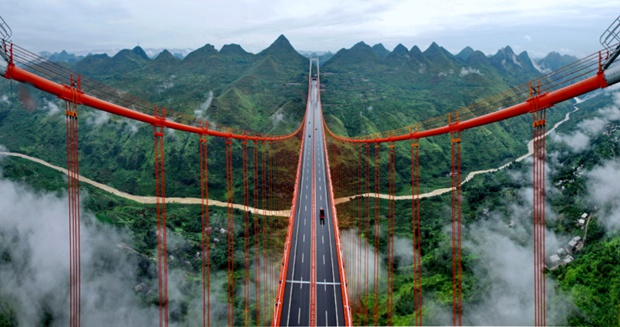
The Balin River Bridge in Guizhou Province, Photo by Chen Enguang
The International Mountain Tourism Alliance: Mission, Vision, and Collective Action
In the years ahead, the International Mountain Tourism Alliance will anchor its efforts in China while embracing a global perspective, deepening its focus on cultural-tourism integration. Domestically, we will promote Guizhou’s exemplary models—including "village-themed IP development," red tourism innovation, ecological study tour design, and digital cultural-tourism empowerment—through the compilation of practical guidelines to support regional development worldwide. Internationally, we will establish cross-border cooperation platforms, such as the joint development of a "Mountain Ecological Study Corridor" with Southeast Asian nations, and facilitate the exchange of best practices—from Japan’s heritage urban renewal to Costa Rica’s eco-education initiatives—fostering mutual learning and collaborative progress.
We firmly believe that through the collective endeavors of colleagues across the globe, cultural-tourism integration will emerge as an irresistible force for advancing high-quality living across nations. Let us take this Annual Conference as a pivotal new starting point, stand shoulder to shoulder in solidarity, and work with unwavering dedication to paint a vibrant future of flourishing tourism and fulfilling lives for all peoples. Thank you.
Image and text source: IMTA
Editor Ⅰ: Zhang Wenwen
Editor Ⅱ: Bao Gang
Editor Ⅲ: Liu Guosong