


Beyond wild vegetables from the fields, there are other foods exclusive to this season. While modern life offers no shortage of delicacies, that unique taste of spring should not be missed. These foods carry regional culture and showcase culinary wisdom.
If wild vegetables are spring's calling card, then the soft, glutinous green rice balls (Qingtuan), as green as distant mountain peaks, also carry the romantic, fresh taste of spring. Taking a bite of spring is the only way not to disappoint the season. Typically, fresh green mugwort is gathered in spring, pounded for juice, thoroughly mixed with glutinous rice flour, wrapped with ample filling, and steamed. These small balls are also a traditional Qingming Festival food, bearing deep cultural heritage. Their history traces back to the Northern and Southern Dynasties, when people used glutinous rice dough to wrap wild greens as a seasonal offering to ancestors and nature spirits. Today, Qingtuan have become distinctive local delicacies. In Jiangnan, they are known for their smooth texture and exquisite appearance; in Fujian and Guangdong, they incorporate more local ingredients and fillings.
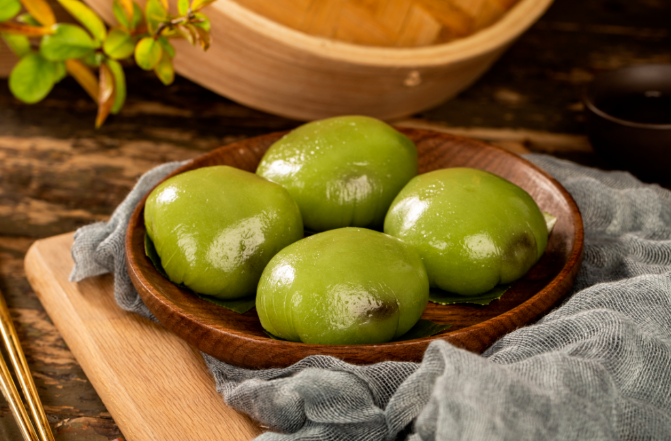
Image source: Baotu.com
Similar to Qingtuan is southerners' Fire Grass Cake. Fire grass, scientifically Gnaphalium affine, also called velvet grass, yellow mugwort, or flour mugwort, is highly edible. Because it sprouts and blooms abundantly around Qingming Festival, it's also called "Qingming Grass." Around Qingming, clusters with yellow flower heads are conspicuous by paths, fields, and slopes. Picked while tender, it's made into the traditional Fire Grass Cake. Wash the herb, blanch in boiling water for 3-4 minutes, then mix with glutinous rice flour, add a bit of sugar, and shape into balls or cakes. Steam or fry as preferred. Freshly made, the cake has a crispy-sweet exterior, tasting sweet and delicious, oily-soft, and endlessly回味无穷 (leaving a lasting aftertaste).
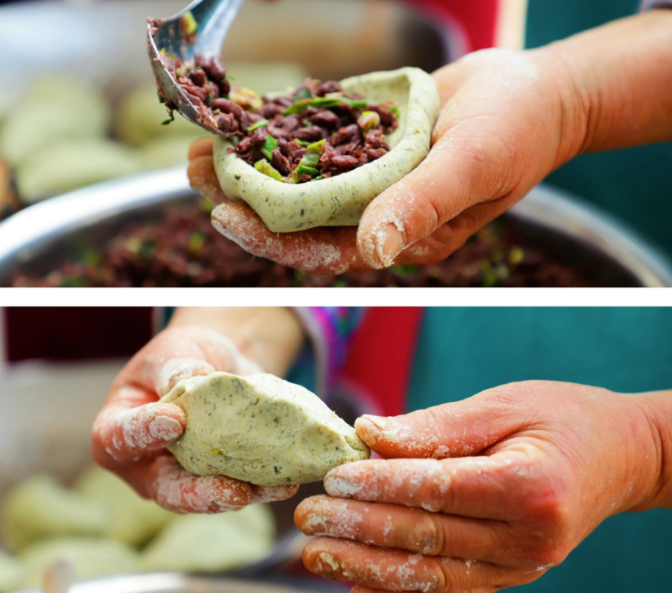
Image source: "Wei Yinjiang" WeChat public account
Spring is colorful—can black be excluded? Then we must mention Jiangnan's Black Rice (Wunianfan). Also called black rice, originally a folk food, it dates back to the Tang Dynasty. In rural areas like Yixing, Liyang, Jintan in Jiangsu, and southern Anhui, it's customary for many households to cook black rice using leaves of the black rice tree on the eighth day of the fourth lunar month. This purple-black glutinous rice is made by boiling leaves of the Vaccinium bracteatum (south candle tree) for a broth, soaking glutinous rice in it for half a day, then steaming in a wooden steamer. The resulting rice is glossy and fragrant. Eating it is believed to dispel wind, detoxify, and prevent insect bites.
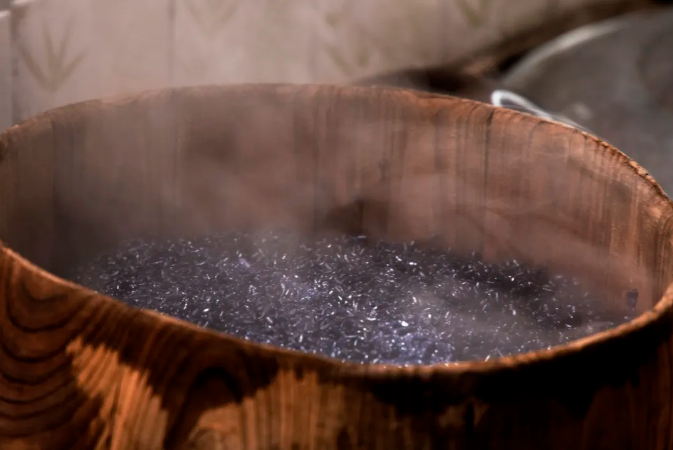
Photo by Chen Guangquan
"The whole year's plan depends on spring." As the first of the 24 solar terms, spring has its exclusive)\ food customs—spring pancakes or spring rolls—both involving wrapping fillings in thin dough skins. Surprisingly, like tangyuan, zongzi, and tofu pudding, spring rolls have their sweet vs. savory debate. Many northerners prefer sweet fillings, to the shock of southern friends. Looking across regions, not only do fillings vary, but shapes also differ—big, small, thick, thin, some fried golden and crispy, others freshly wrapped and eaten light.
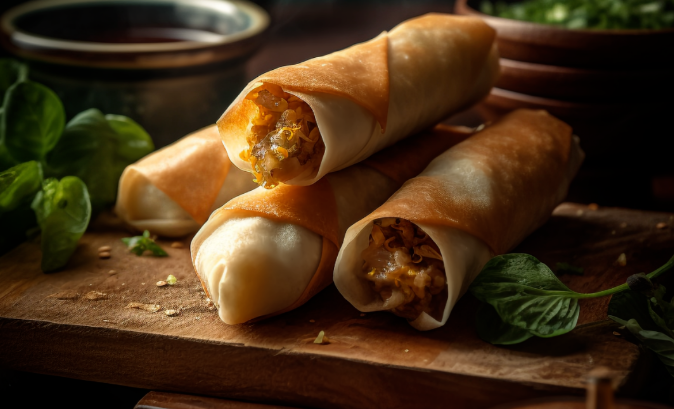
Image source: Baotu.com
In spring, the season of renewal and vibrant life, we give thanks for nature's generous bounty.
Editor Ⅰ: Zhang Wenwen
Editor Ⅱ: Bao Gang
Editor Ⅲ: Liu Guosong