


Under the warm spring sun, wild greens in the mountains quietly emerge. They are gifts from nature and treasures on the spring dining table.
When the morning mist has yet to lift in spring, wild onions begin to push through the soil in the hills. This wildly growing mountain vegetable is an unmissable spring delicacy. Its spiciness and fresh aroma, skillfully transformed, become dishes that awaken the palate, creating a resonance between nature and taste. Wild onions have many names, such as Allium macrostemon, 'thief garlic', or mountain garlic. It's a perennial herb of the lily family's onion genus, with slender tubular leaves and small purple flowers. When the leaves age, its bulb is eaten, which is white as jade, hence called xiebai. Its root also resembles garlic but is smaller, earning it the name 'small-root garlic'. Wild onions typically grow in patches, preferring well-draining sandy soil over heavy clay. Those familiar with their growing habits can easily gather a full basket once they spot one. Native to China, wild onions, anciently called "xie", are very ancient plants. Records show Chinese cultivation and consumption date back to the Shang Dynasty, nearly 4,000 years ago. Before the Qin Dynasty, they were honored as one of the "Five Vegetables"—"kui (mallows), jiu (leeks), huo (bean leaves), xie, and cong (green onions)"—where "xie" referred to wild onions. Today, they are distributed nationwide, from Shandong and the Northeast in the east, to the southwest and Tibet in the west, and down to Guangdong and Guangxi in the south, with high yields in Yunnan, Guizhou, and Sichuan. As stated in the Yellow Emperor's Inner Classic - Basic Questions: "The five grains are for nourishment, the five fruits for assistance, the five livestock for benefit, the five vegetables for supplementation. Consume them in harmony of flavors to replenish essence and boost energy."
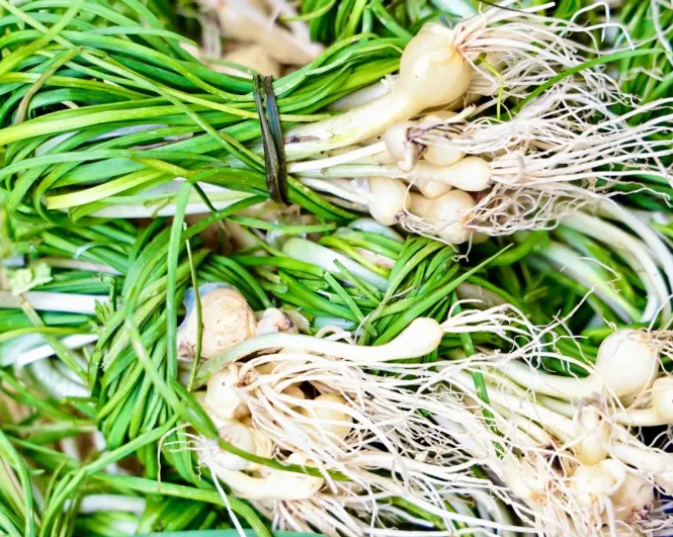
Image source: Jiangxiang Renhuai
Kalimeris indica is the season's gift to the Jiangnan region. During spring outings, picking a bunch of fresh wild Kalimeris from the field ridges is a unique March scene in Jiangnan. Remember this children's rhyme? "Jiecai and Kalimeris, sister married just behind the door." Like shepherd's purse, Kalimeris remains a true wild vegetable; although cultivated versions are available year-round, none match the fragrance of a bunch hand-picked in March. The most tender Kalimeris appears in the second and third lunar months! As temperatures rise and tender buds form, people begin foraging in the fields. Unlike shepherd's purse, Kalimeris shouldn't be dug up by the root; instead, the tender tips are snipped with scissors, a practice called "tiao" in Jiangnan. Kalimeris leaves are green, sometimes purplish-red, tender and fragrant; its purple flowers are widespread, especially common in Anhui, Jiangsu, and Zhejiang. The Ming Dynasty's Wild Vegetable Guide records: "Grows in clusters in the second and third months, edible cooked, or can be made into a paste." Traditional Chinese medicine considers Kalimeris cooling and pungent, effective in clearing heat, detoxifying, cooling blood, stopping bleeding, and reducing swelling. It benefits those with hypertension, pharyngitis, acute hepatitis, or tonsillitis. As a seasonal fresh ingredient, it's delicious both cold-tossed or stir-fried, with just-picked Kalimeris best suited for cold dishes. Wild Kalimeris has a slight astringency but a penetrating aroma. Blanch it first, then add dried fragrant tofu and sesame oil for the Jiangnan classic "Kalimeris with Dried Tofu." Beyond fresh eating, Kalimeris can also be sun-dried—excellent for braising with meat.
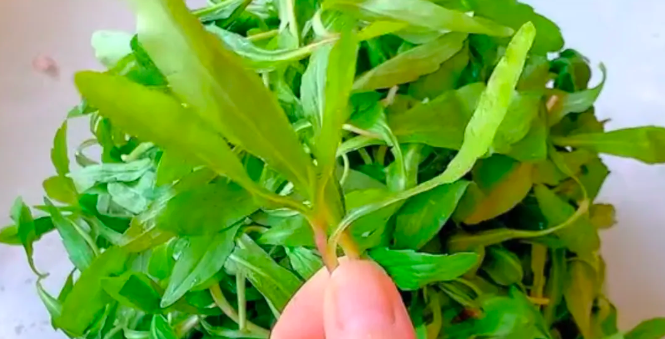
Image source: Culinary Diary
Spring brings renewal and rising yang energy, making it the best time to nourish the liver. Adapting our diet to nature's rhythm, shepherd's purse (Capsella bursa-pastoris) is one of the most representative vegetables. This cruciferous wild plant has rosette-like leaves and jade-white roots. Known as the "harbinger of spring" in Jiangnan and the "queen of wild vegetables" in the north, its names are quite majestic. It embodies the poetry of "spring by the stream with shepherd's purse flowers" and, as a "natural nutrient bank," offers an excellent spring wellness option. Its many names derive from local dialects: dimicai, jie, water chestnut vegetable, earth vegetable, earth nail vegetable, etc. It typically grows in fields and wastelands, especially thriving and lush in vegetable plots. Shepherd's purse is not only highly medicinal but also deliciously versatile: cold-tossed, stir-fried, in soups or porridge, as filling for dumplings, in fish rolls with shepherd's purse, or with winter bamboo shoots. Its texture is crisp with a grassy fragrance and thirst-quenching juice, making every preparation memorable. When cooking shepherd's purse, it's advised not to add garlic, ginger, or cooking wine, as these can overpower its delicate aroma.
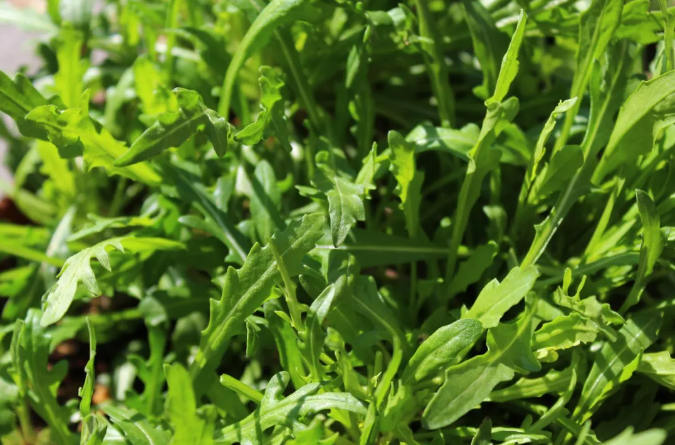
Image source: Baotu.com
Spring bamboo shoots—the longed-for flavor of early spring. Growing in early spring, imbued with mountain mist, they are the aspiration and belief of the season's palate. Versatile enough for both elegant and humble kitchens, they suit steaming, boiling, stewing, stir-frying, with meat or vegetables. Once peeled, spring bamboo shoots reveal slender, white, tempting forms with a subtle fragrance. Cooking methods are diverse: oil-braised spring bamboo shoots, shoot tip shaomai, spring bamboo shoots with walking fish, yanduxian (salted pork and bamboo shoot soup), salt-boiled bamboo shoots, red yeast rice braised shoots... Speaking of bamboo shoots, China is undoubtedly the "Land of Bamboo Shoots." Bamboo forests span 27 provinces and regions, especially in the warm, humid south—Zhejiang, Sichuan, Yunnan, Guizhou—providing ideal conditions. Annual production far leads the world, accounting for half the global total, granting Chinese people easy "bamboo shoot abundance." The variety is also extremely rich, with over 80 types. Spring brings spring shoots, winter brings winter shoots, and summer/autumn offer rhizome shoots—truly an unending cycle of deliciousness.

Image source: A Bite of China
In spring's feast for the senses, Chinese toon (Toona sinensis) is undoubtedly the brightest star. Compared to shepherd's purse and chives, Chinese toon is arguably the most controversial spring tasting vegetable. On one hand, its price has soared in recent years, nearing or exceeding 100 yuan per half-kilogram in some areas; on the other, its unique aroma divides opinions sharply. Unlike common ground-grown vegetables, Chinese toon grows on trees, earning it the name "tree vegetable." Toon buds are available for only one or two months, truly "spring-limited." Each early spring, tender toon buds sprout. They are at their best when 10-12 cm long. Beyond 15 cm, quality declines, taste becomes dull, nutrition drops, and nitrate content rises, posing potential risks. Therefore, timing is key: best before Grain Rain, following the principle of "eating early, fresh, and tender."
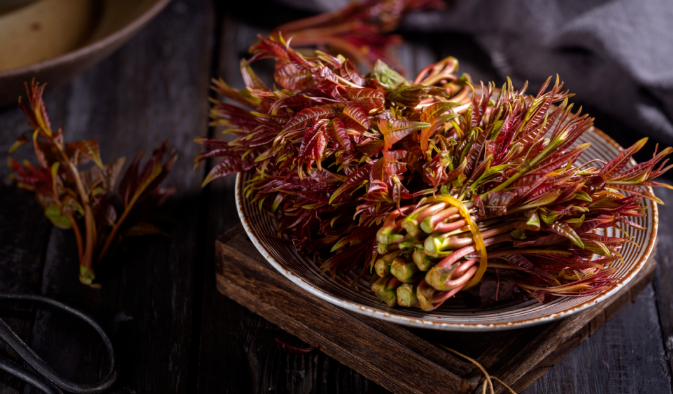
Image source: Baotu.com
Slender water dropwort (Oenanthe javanica) resembles a Jiangnan lady—fragrant, tender, and delicate. As one of the "Eight Water Delicacies," water dropwort holds a unique place in Jiangnan, carrying the flavor memories of countless people. Its leaves are vibrant green, young stems flawless white, fresh and elegant. Its hollow stems give it the auspicious nickname "lulutong" (all paths lead through), symbolizing smooth passage, making it a welcome dish on the table for its good implied meaning. Thriving in water-rich southern China, its history traces back 3,000 years to the Zhou Dynasty. China's earliest poetry collection, the Book of Songs, mentions it multiple times. The Odes of Lu - Pan Water states: "Joyful is the Pan water, where we gather its qin." Here, qin for sacrifice refers to water dropwort. Its special fragrance must be tasted to be known. The Lüshi Chunqiu praises it as "the finest vegetable, the qin of Yunmeng." It possesses the unique fresh scent of aquatic plants and an earthy aroma.
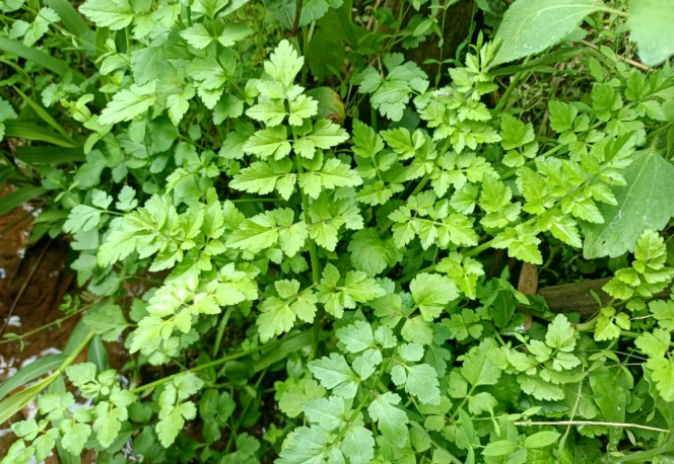
Image source: Internet
Dandelion is far from a "wallflower in the weed world"! Also called yellow-flowered earth nail or popoding, it grows abundantly in spring fields and grasslands, blooming with small yellow flowers. Most charming are the fluffy seed heads on slender stems—children love to blow them, watching the seeds float away to take root elsewhere. A medicinal and edible plant, works like Newly Revised Materia Medica and Physician's Materia Medica mention its value. A common Chinese wild vegetable and herb, it clears heat, detoxifies, reduces swelling, and dissipates nodules. Spring dandelions are tender and juicy, with many ways to enjoy: dipped in sauce, stir-fried, cold-tossed, or even air-dried for tea—all delicious.
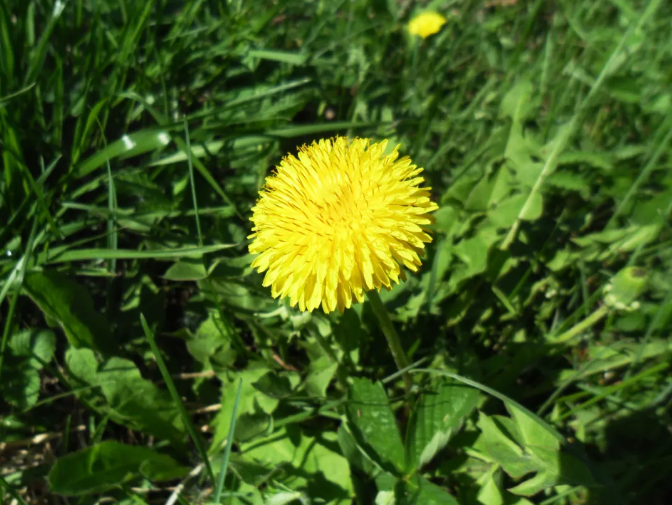
Image source: Baotu.com
Editor Ⅰ: Zhang Wenwen
Editor Ⅱ: Bao Gang
Editor Ⅲ: Liu Guosong