


Gran Canaria, the third-largest island in Spain's Canary archipelago, boasts breathtaking natural landscapes shaped by its unique geographic location and volcanic history. Dubbed a "miniature continent," this island merges deserts, mountains, forests, and coastlines into a single ecosystem where biodiversity and fragility coexist. It serves as both a living fossil of Earth's evolution and a testing ground for humanity's quest to balance nature and ecology. Below is a comprehensive exploration of its natural wonders, from geological formations and climate ecosystems to marine resources, astronomical landscapes, and conservation challenges.
Volcanic Masterpieces: Sculpted by Fire
Gifts of Volcanic Activity
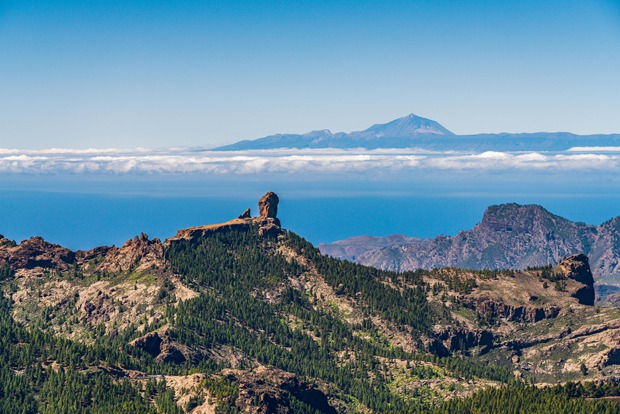
Gran Canaria’s origins trace back to volcanic eruptions over 14 million years ago, leaving vivid geological scars. The island’s central peak, Pico de las Nieves (1,949 meters), dominates the skyline, surrounded by volcanic cones, lava fields, and deep ravines. Volcanic forces not only shaped the island’s skeleton but also created micro-landscapes:
Maspalomas Dunes: A 400-hectare expanse of golden sand in the south, formed by wind-blown Sahara particles contrasting with the azure Atlantic. Visitors are restricted to boardwalks to protect this fragile ecosystem, yet the dunes’ shimmer under sunlight remains awe-inspiring.
Barranco de Fataga: A steep-walled canyon in the island’s center, renowned for its palm-fringed oasis at its base. A testament to volcanic erosion and ecological resilience, it offers hikers a journey through geology and life’s symbiosis.
The Genesis of a Miniature Continent
Despite spanning just 1,560 km², the island compresses multiple climate zones. From coastal deserts to misty pine forests in the highlands, its nearly 2,000-meter elevation gradient creates dramatic microclimates. For instance, Las Palmas in the north remains perpetually humid, while southern Maspalomas is arid—earning the nickname, "four seasons in one mountain, ten climates in ten miles."
Climate & Ecology: A Sanctuary of Life
Blessings of a Subtropical Climate
Influenced by the North Atlantic Current and trade winds, Gran Canaria enjoys a mild, year-round average of 24°C with minimal temperature fluctuations—a perpetual spring. This climate nurtures rich biomes:
Endemic Flora: Ancient dragon trees (symbols of the Canary Islands), Canary pines (volcanic-adapted species with deep root systems), and diverse cacti thrive in arid zones.
Endangered Fauna: Over 40% of species are endemic to the archipelago, including the blue chaffinch and Canary lizard. Yet human activity threatens some, like the Maspalomas dune ecosystem, degraded by tourism.
Biosphere Reserve Mission
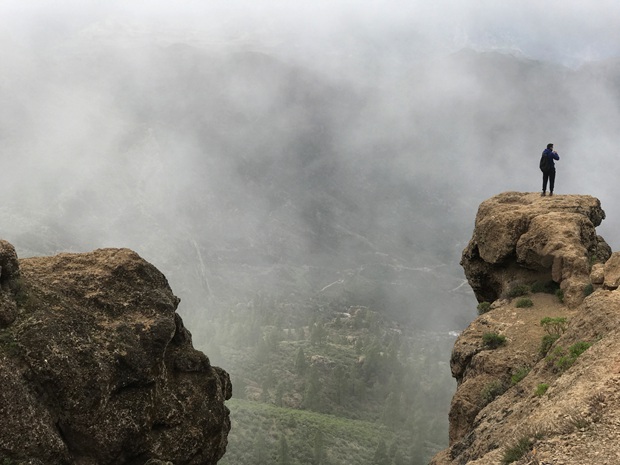
UNESCO has designated 40% of the island as a World Biosphere Reserve, including core areas like El Parque Rural de Nublo. These zones act as genetic banks and natural laboratories for volcanic ecosystem research.
Oceans & Coasts: A Treasure of Blue Resources
Diversity of 128 Beaches
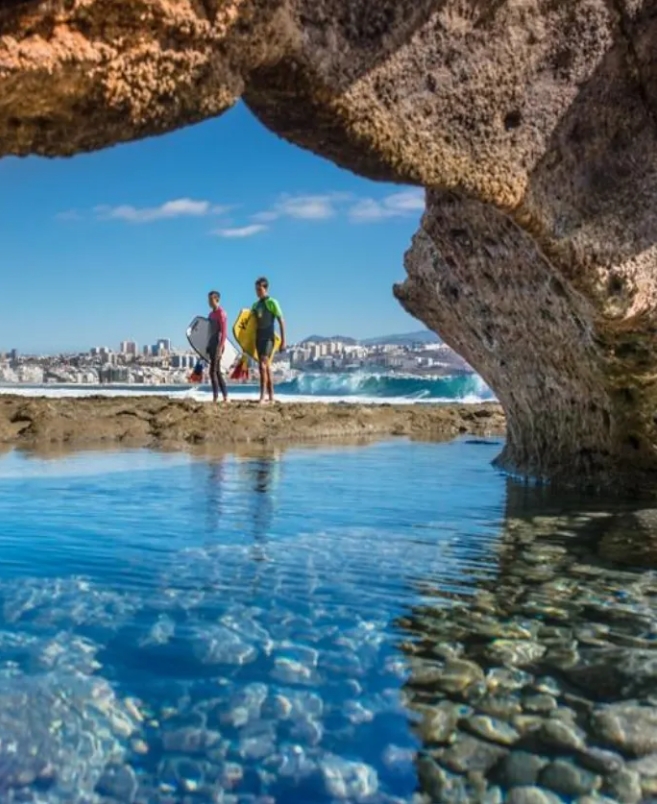
With 236 km of coastline, Gran Canaria’s shores range from golden sands to volcanic black:
Puerto de Mogán: A "Little Venice" in the southwest, famed for colorful houses, flower-lined streets, and crystal-clear waters—ideal for leisure and water sports.
Playa de los Gigantes: A black-sand beach beneath cliffs, known for giant waves attracting surfers and divers.
Marine Challenges and Conservation
Surrounding waters are vital North Atlantic fishing grounds, rich in tuna and octopus. Yet overfishing and pollution jeopardize coral reefs and fish stocks. Recent efforts, including marine protected areas and seasonal fishing bans, aim to restore balance.
Stars & Astronomy: A Window to the Cosmos
Gran Canaria’s low light pollution and stable atmospheric conditions have earned it UNESCO recognition as one of the world’s four "Starlight Reserves," alongside Hawaii and Chile. The island’s observatory houses Europe’s largest single-mirror telescope, the William Herschel Telescope (4.2 meters), enabling scientists to study stars and solar activity via laser-guided systems.
Conservation & Challenges: The Tightrope of Sustainability
Tourism vs. Ecology
Tourism fuels over 70% of the economy but has caused water scarcity and dune erosion. Without protection, Maspalomas Dunes could vanish within 150 years.
Green Transition Efforts
The government promotes renewable energy (e.g., wind farms) and water-saving measures, while capping visitor numbers in sensitive zones. For example, Timanfaya National Park restricts access to guided buses to minimize human impact.
Gran Canaria’s natural heritage is both its greatest treasure and a test of human ingenuity. From volcanic lava to stargazing, dune preservation to marine stewardship, the island is not merely a geographic "miniature continent"—it’s a microcosm of ecological civilization. Only by balancing development and conservation can this Atlantic jewel continue to shine.
This article is compiled by the IMTA from content curated across its official WeChat, Weibo, and website platforms.
Note: Some images are sourced from the internet for non-commercial sharing purposes. If any infringement is identified, please contact us for immediate removal.
Editor Ⅰ: Zhang Wenwen
Editor Ⅱ: Bao Gang
Editor Ⅲ: Liu Guosong