


On May 29, the"International Mountain Tourism Day 2025" Theme Events kicked off on Gran Canaria, Spain. With the theme "Embracing Mountains and Seas, Coexisting with Cultures — Mountain Tourism and Cultural Inclusiveness for the Future," the event brought together representatives from international organizations, government officials, industry leaders, experts, scholars, and media worldwide to explore inclusive collaboration and shared development in global mountain tourism. The program included an opening ceremony, thematic forums, mountain cultural exchange sessions, a China-Spain cultural tourism exhibition, and the "Gran Canaria Night" welcome dinner. Participants engaged in diverse formats to share advanced concepts, discuss cutting-edge issues, and deepen practical cooperation. Mr. Dai Bin, President of China Tourism Academy (CTA), delivered a speech at the"Innovation in Mountain Tourism & Local Community Participation" Theme Forum.
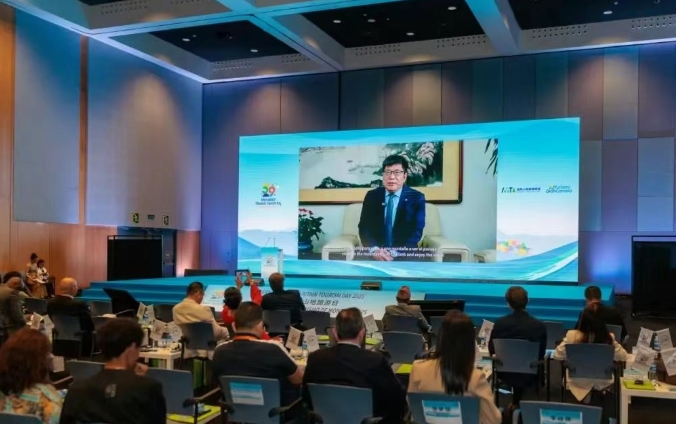
The full text of the speech is as follows:
On the occasion of the commemoration event of the International Mountain Tourism Alliance on May 29th, I would like to extend my warm congratulations on behalf of the China Tourism Academy! I believe it is timely for this conference to choose the theme of "format innovation and community sharing".
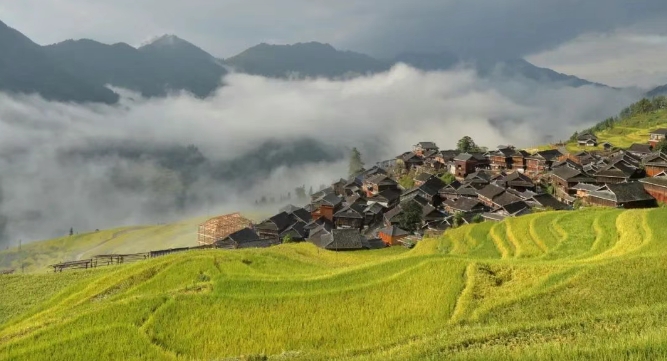
First of all, tourists have such expectations. As mass tourism enters a new stage of higher-level and higher-quality development, tourists' footsteps have long gone beyond simple and superficial experiences like "climbing mountains to enjoy the scenery". They are eager to learn more about the lifestyles and cultural connotations behind mountains, mountainous areas, and mountain residents. Countless mountainous areas carry both natural and humanistic heritage. Take Guizhou, China as an example; the mountains hide rich and colorful ethnic life, and it is also a region where multiple ethnic groups gather. Among these mountains, thousands of Miao, Dong, Buyi, and people of various ethnic groups have lived and multiplied, creating a long history and culture.
From an international perspective, the role of mountains as guardians of civilization is equally striking. In Honduras, I witnessed the splendid Maya civilization. The inheritance of Maya culture also stems from the protection of mountains; the towering mountains made it difficult for foreign cultures to invade, which is why the unique natural ecology and humanistic history of the region have been preserved. Therefore, when tourists step into mountain scenic spots, can they deeply understand the local humanistic history, especially the mountain residents who have lived here for generations? Do tourists understand the local lifestyle?
How can we better appreciate the beauty of nature, comprehend the beauty of humanity, and cultivate people's souls? This experience gap of "seeing the scenery but failing to understand the culture" is not only the experience demand of current mountain tourism visitors, but also a proposition that government planners and industry practitioners need to solve together.
How can we achieve corresponding format innovation? The core of format innovation should not stop at adding superficial sightseeing experiences, but at building a "translation system" for cultural decoding. By restoring ancient civilizations through modern technology, tourism formats can become a medium connecting the past and the present, and communicating between ethnic groups. Only then can tourists transform from "onlookers" to "cultural empathizers", enabling mountain tourism to truly realize the value sublimation of cultivating the soul.

As a tourist, standing in front of a thousand-year-old ancient building, one should not just look. If no one explains the local history to me, and no one explains the local history and culture to students and children, how can people cultivate their own or even the next generation's feelings for their country through research trips? This is not only the essential experience demand of contemporary travelers, but also the only way for mountain tourism to achieve cultural inheritance.
However, in developing mountain tourism in the new era, we must also fully respect the wishes of local residents and safeguard their rights. It is often said that the development of mountain scenic spots should preserve the authenticity of mountains. Many tourists visiting mountain scenic spots or mountain tourism destinations hope to see the most original state of mountains and the original lifestyle in mountains, which is the right to tourism.
For this reason, we have proposed and adopted some new tourism development concepts, such as sustainable tourism, responsible tourism, inclusive tourism... But we have ignored that mountain residents and mountain ethnic groups who have lived here for generations also have the right to move towards modernization and enjoy modern culture. Therefore, while tourists assert their so-called "right to tourism", they should pay more attention to local residents. Do people respect and consider the local right to development? This is a major consideration in judging the legitimacy of contemporary tourism development.
We must not let the stilt houses of mountain residents or their relatively ancient lifestyles make people mistakenly think that they have seen the unique aspects of local customs, and thus force local residents to maintain their original lives—keeping everything unchanged in terms of local construction, production, lifestyle, education, etc.—under the pretext that such an original style is unique. Essentially, this alienates original buildings and ancient lifestyles into "backward aesthetics" and "folk performances", depriving local residents of their right to development from the perspective of tourists.
Have people ever thought? A generation of mountain residents can gain the right to employment and property income by developing tourism into formats and turning their houses into travel elements. They also share the same aspirations as us—reading ten thousand books to nourish the soul and traveling ten thousand miles to measure the world. In this vast and beautiful land, on this blue and bright planet, who does not yearn for the right to walk freely?
It is precisely for this reason that China has put forward the innovative concept of "inclusive tourism", aiming to allow more groups to share beautiful experiences: whether it is simple residents living deep in mountainous areas or thousands of people rushing between urban and rural areas, all can realize the spiritual pursuit of "reading ten thousand books and traveling ten thousand miles" during their journeys. This is not only an improvement in the quality of life, but also an expansion of the boundaries of vision—ensuring that everyone's right to pursue a better life is fully protected during their travels through mountains and rivers, making the dream of poetry and distant places no longer exclusive to a few.
If the development of tourism economy can allow more urban residents, plain residents, and tourists from developed countries and regions to see the natural scenery and human customs of mountainous areas, but cannot enable the residents here, especially the indigenous people, to achieve better development and live a modern life, is such a deformed form of tourism what we want in contemporary tourism? Is it the correct value orientation in the process of tourism development?
Therefore, I think the Mountain Tourism Alliance has raised this question, and we need to answer it well. As practitioners in the tourism industry, we need to improve our understanding of tourism development through format innovation and sharing with community residents, and jointly promote higher-quality development of tourism. The development of tourism should not be limited to the operation mode of "enclosing a mountain", "enclosing a body of water", and "collecting tickets", as such a model will restrict the growth space of scenic spots.
Our policy orientation is to promote the reduction of ticket prices in more tourism scenic spots supported by state-owned resources in eligible areas to make them more inclusive. If the ticket prices of these scenic spots are reduced, where will the momentum for the sustainable development of mountain scenic spots come from?
Therefore, we need more technology, humanity, creativity, and more young people to join the process of tourism format innovation. Thus, we can provide tourists with more diversified and higher-quality products and services. Of course, in promoting the format innovation and community sharing of mountain tourism, we must also fully respect the wishes of the local people, the plans of the local government, and the requirements of relevant laws in each country and region, especially in specific mountain scenic spots. To do this work well, I think we must advance from at least the following three aspects.
I. Strengthen theoretical construction
When we talk about the development of mountain tourism in the new era, we must face three fundamental propositions: for whom is the development? Who should we rely on? What should be the focus?
Is the development logic of mountain tourism focused on creating diverse cultural experiences for tourists, or must it incorporate the development rights of local residents into the core development framework? This question is by no means a simple binary choice, but a major theoretical proposition that touches the essence of sustainable tourism development.
Moreover, can the development momentum of mountain tourism only rely on the injection of foreign enterprises? Are local residents destined to participate in the development process only in a limited way, engaging in simple labor and employment?
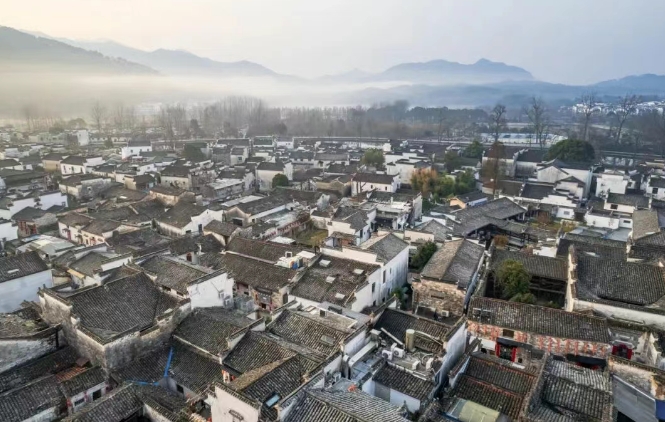
Behind this series of questions lies a deep inquiry into tourism development models. When I observe the development of mountain scenic spots and ancient villages and towns in China, I often worry about a phenomenon: when businesses, capital, technology, and creativity intervene strongly, and foreign capital reconstructs mountain spaces with standardized templates, it always leads to a double paradox: on the one hand, commercial logic gives birth to identical "ancient town formats", reducing original culture to consumption symbols; on the other hand, residents are forced to transform from "owners of the land" to "employees of scenic spots", with their emotional connection to their homeland and decision-making power in development quietly stripped away.
Essentially, such a development path simplifies the regional right to development into a one-way input of capital and technology. When people talk about the sustainability of mountain tourism, they may should ask more: how to enable local residents to transform from onlookers of development to makers of rules, and allow regional cultural genes to achieve creative continuity in the context of modern commerce?
When local residents renovate their houses into homestays and turn tourism into a format, they seem to achieve a win-win situation of employment and property income. However, behind this superficial prosperity, there is a deeper hidden worry—without long-term development plans and industrial upgrading paths, young people will eventually choose to leave because they see no prospects for development.
Have you ever imagined? If one day, only the elderly are left guarding empty streets in those mountain scenic spots and ancient mountain villages that were once highly expected, with only guard dogs wandering on the stone roads, is such a "poetry and distant place" really the future of mountain tourism we expect?
These issues are not only the practical dilemmas in the development of mountain tourism, but also a profound test of the development concept of the entire industry. It is hoped that the Mountain Tourism Alliance and all sectors of society can build consensus and jointly construct a people-centered theoretical system for mountain tourism development, so that the fruits of development can truly benefit local residents and guide our practices.
II. Innovate in practice
In the process of innovative practice, we need to give play to the strength of industry organizations including the Mountain Tourism Alliance, as well as the strength of travel agencies, hotels, resorts, and technological innovation teams. On the path of exploring mountain tourism, I have always been concerned about one question: how to focus on format innovation to attract young people to integrate deeply into this field?
Recently, through visiting many tourism entrepreneurship and innovation projects at home and abroad, I have found the answer: every in-depth conversation with entrepreneurs makes me欣喜地 discover that the younger generation represented by post-95s and post-00s is injecting new vitality into the industry with their innovative concepts that subvert traditions. They empower local traditional resources with their wisdom, the power of science and technology, and the power of cultural creativity.
In Dunhuang, China, and Qinghai Lake in Xining, I have seen refreshing practices brought by a group of young entrepreneurial teams—passionate mountain cross-country races, dynamic mountain bike challenges, challenging Gobi extreme sports, and unique cultural and creative projects. These innovative formats not only revitalize regional characteristic resources, but also build a bridge between tradition and modernity.
When communicating with them, I see a passionate desire for innovation in their eyes and a firm belief in the industry in their words. This makes me firmly believe that whether it is mountain tourism or other forms of tourism, only by continuously attracting young people to join, driving changes with their innovative thinking, cutting-edge technology, and unlimited creativity, can we have hope and a bright future in the tide of the times.
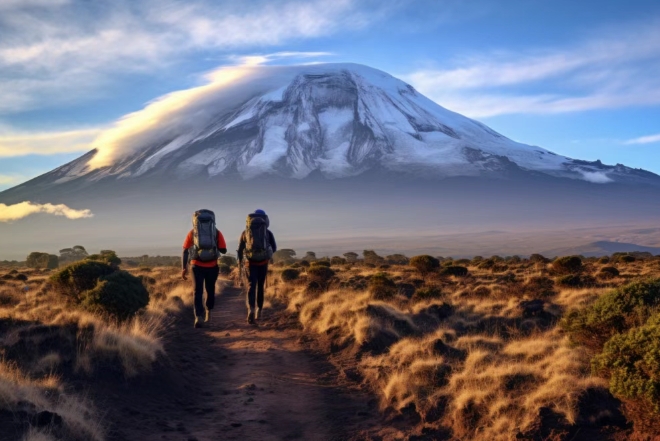
When young people step into mountain tourism with enthusiasm, they will surely burst out infinite possibilities to change the industry. I earnestly hope that more young faces will emerge in the international and domestic exchange activities held by the Mountain Tourism Alliance, and that more post-95s and post-00s entrepreneurs will come to share their entrepreneurial experiences. Although they are relatively immature, their spirit of exploration is the key to breaking through the bottlenecks in industry development.
This reminds me of what I said at an orphanage in Uganda: "You are my past, but also our future." The development of human society and the future of the tourism industry must be entrusted to young people.
For this reason, I call on the Mountain Tourism Alliance to actively link the forces of the government, society, and business, and gather strong synergy for innovation and entrepreneurship under the guidance of the "people-centered" theory. We need to set up observation points in mountainous areas with different altitudes and landforms, and through systematic research and analysis, determine which areas are suitable for developing sightseeing tourism, which have natural advantages for health and vacation, and which can be built into adventure tourism resorts.
We should accurately position market demand with big data analysis and build a demand-oriented product development system. At the same time, by visiting tourists and community residents, we should continuously collect dynamic data, monitor the sustainable development of mountain tourism, and release authoritative reports regularly. Only when the development results satisfy the people and benefit them can mountain tourism truly embark on a path of sustainable development.
III. Strengthen international cooperation
As China's tourism industry moves from the primary stage of mass tourism to the advanced stage of comprehensive development, open learning and experience sharing have become increasingly crucial. The balanced development of ecological protection and tourism development in the Swiss Alps in Europe, the development experience of mountain tourism in Spain's Canary Islands, and the context-specific mountain tourism development models in Central America, South America, and South Pacific island countries are all worthy of in-depth research and learning. At the same time, China is willing to share its experience and relevant data on mountain tourism development with the international community with an open attitude, building a bridge for global exchange and mutual learning in mountain tourism. Guided by the "people-centered" development concept, knowledge, experience, and wisdom have no national boundaries. Only by working together, pooling our efforts, and using the power of the government and business to meet people's yearning for a better life of poetry and distant places, can we promote China's mountain tourism to embark on a new journey of sustainable and high-quality development.
Source: IMTA
Editor Ⅰ: Zhang Wenwen
Editor Ⅱ: Bao Gang
Editor Ⅲ: Liu Guosong