


On May 29, the"International Mountain Tourism Day 2025" Theme Events kicked off on Gran Canaria, Spain. With the theme "Embracing Mountains and Seas, Coexisting with Cultures — Mountain Tourism and Cultural Inclusiveness for the Future," the event brought together representatives from international organizations, government officials, industry leaders, experts, scholars, and media worldwide to explore inclusive collaboration and shared development in global mountain tourism. The program included an opening ceremony, thematic forums, mountain cultural exchange sessions, a China-Spain cultural tourism exhibition, and the "Gran Canaria Night" welcome dinner. Participants engaged in diverse formats to share advanced concepts, discuss cutting-edge issues, and deepen practical cooperation. At the "Innovation in Mountain Tourism & Local Community Participation" Theme Forum, Mr. Carlos Vogeler, Former Executive Director of UN Tourism, delivered a speech.

The full text of the speech is as follows:
The tourism industry has successfully weathered many crises. Looking back at the many crises experienced by the modern tourism industry, it can be seen through two key indicators: international tourist arrivals and tourism revenue. After the Gulf War and the disintegration of Yugoslavia in the early 1990s, after the Asian financial crisis in the late 1990s, after the "9·11" incident in 2001, after the Iraq War, and after the outbreak of Severe Acute Respiratory Syndrome (SARS), the first intercontinental global pandemic of the 21st century, the tourism industry achieved a full recovery.
The COVID-19 pandemic dealt a heavy blow to the global tourism and hotel industry, causing severe economic losses and having a profound impact on the industry. As countries closed their borders to curb the spread of the virus, the tourism industry suffered a断崖式 decline, and at the same time, it spawned profound changes in consumer behavior and travel patterns, some of which may continue for a long time.
In 2024 (four years after the outbreak of the pandemic), the tourism industry rebounded strongly, and the passenger flow in most destinations exceeded the 2019 level, marking a fully consolidated recovery of international tourism from the most severe crisis in history. The global number of international tourists is expected to reach 1.4 billion in 2024, generating 1.6 trillion US dollars in revenue for destinations,宣告 the full recovery of the industry. The World Tourism Organization predicts that the number of international tourists will increase by 3% to 5% year-on-year in 2025. The study "The New Generation of Travelers and Destinations: Outlook for the Transformation of the Tourism Industry" jointly released by Google and Deloitte shows that based on the industry evolution trend since 1990, the global number of trips will increase from the current 1.6 billion to 2.4 billion by 2040.
Facts have proved that the tourism industry has shown strong resilience and adaptability - it can not only cope with the most severe challenges but also learn from them, adjust its operation mode, and flexibly respond to changes in internal and external demands.
This crisis has brought us many inspirations. The most important one is: we must improve the risk management system and enhance the response capacity of tourist destinations to resist various shocks that will inevitably occur in the future - whether natural disasters, epidemics, economic crises, or security issues.
The following actions need to be taken:
- Implement excellent standards of health and hygiene: implement scientific prevention and control measures and strengthen public publicity and guidance.
- Build a multi-stakeholder participation mechanism for tourism policies: ensure that stakeholders in the tourism industry and affected groups share the dividends of more fair and inclusive development.
- Strengthen destination coordination and implementation mechanisms: optimize tourist flow management through product diversification and infrastructure upgrading to avoid the negative impact of overtourism.
- Shift from pursuing the number of tourists to focusing on quality improvement: take cultural authenticity, in-depth experience, and personal growth as the core, and promote the transformation of tourism demand to more meaningful and attractive experiences.
In the post-pandemic era, consumers' demand for outdoor activities, niche destinations, off-season travel, and unpopular tourist routes is increasing day by day, which provides an opportunity for mountain tourism destinations to restructure the green and sustainable development model - it is necessary to establish an emotional connection between tourists and local communities through product and service innovation.
The key to the success of mountain tourism lies in providing unique localized experiences that can resonate with tourists emotionally and benefit the community. In this process, mountain tourism must achieve a comprehensive innovation from concept to practice and actively respond to the following fundamental challenges:
Seasonal challenges:
Develop a full-season tourism product system, strengthen the cultivation of the off-season market, and effectively stabilize the fluctuation of passenger flow.
Infrastructure shortcomings:
Build a diversified investment and financing mechanism, expand the partner network, and lay a solid foundation for development.
Coordination of development and protection:
Formulate scientific guidelines, promote community participation in decision-making, and ensure the sustainable development of society, economy, and the environment.
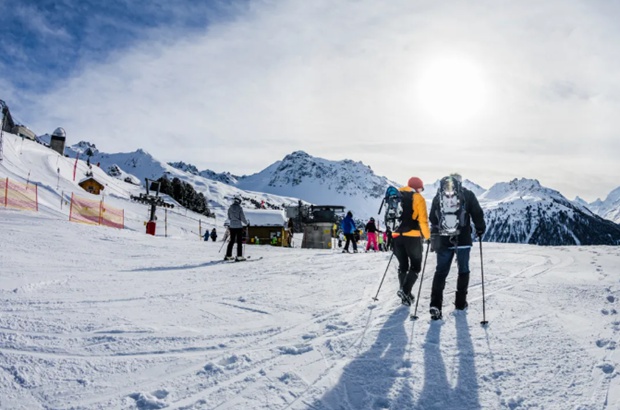
Swiss Alps Skiing
Ultimately, the core driving force for the development of the tourism industry lies in the industry's innovation capability and resilience to change.
It is well known that it is more difficult for mature tourist destinations to innovate, which brings development opportunities for emerging destinations through transformative innovation. The "2024 Tourism Trends and Policies" report of the Organization for Economic Cooperation and Development (OECD) warns us that the industry recovery is uneven and points out three new challenges: escalating geopolitical tensions, continuing pressure on the cost of living, and frequent climate-related events. To cope with these challenges, it is necessary to formulate forward-looking policies and strive to build a more resilient, sustainable, inclusive, and beneficial future development pattern for the industry.
The "2024 State of the Tourism and Hotel Industry" report released by the well-known consulting firm McKinsey emphasizes that the tourism industry is undergoing profound changes, and three major factors are comprehensively reshaping the industry's ecological pattern:
1. Dual transformation of source markets and destinations:
Short-distance travel has become the dominant form of the market. Although international tourism has attracted much attention, the industry should grasp the local opportunities close at hand. Domestic tourism still occupies the main body of consumption, and the regional tourism market continues to heat up.
2. Surge in demand for experiential tourism:
Tourists are no longer satisfied with standardized products. Although it is difficult to achieve complete personalization, practitioners should enhance their value propositions through precise market segmentation. Those who cannot clearly identify target customer groups and adjust services accordingly may be eliminated by the market.
3. Innovative business strategies are imperative:
Tourist destinations need to plan ahead to deal with overtourism. The industry should immediately start planning mitigation strategies, scientifically evaluate environmental carrying capacity through data analysis, improve the transportation infrastructure system, strengthen the training of professional talents, and protect the sustainable development of natural and cultural heritage.
Based on the above research results, all stakeholders in the tourism industry need to layout forward-looking with innovative thinking and actively grasp the pulse of trends rather than sticking to past experience.
Mountain tourism destinations need to systematically analyze market dynamics, consumer behavior, technological evolution, and social changes to establish competitive advantages, accurately identify new opportunities and challenges, and serve the new generation of travelers.
The market dominance has fundamentally shifted from the supply side (sellers) to the demand side (buyers). Contemporary tourists not only have consumer sovereignty but also have clear product cognition and acquisition capabilities. The new generation of travelers has more knowledge reserves and more diversified information acquisition channels.
They are no longer satisfied with being passive onlookers but pursue in-depth interaction with the community and practice meaning-oriented travel. We should provide immersive experiences beyond conventional activities, implement precise market segmentation and personalized product design for the "dream society" customer group that pursues spiritual value.
Looking back at the evolution of social forms:
100,000 years ago:
During the agricultural civilization period, people pursued physical goods.
Two hundred years ago:
In the era of the Industrial Revolution, people advocated standard products.
Thirty years ago:
In the information society stage, people valued service value; today: in the "dream society" form, people crave emotional experiences.
Then, what is the essential difference between "tourist activities" and "tourist experiences"?
When tourist activities are endowed with emotional attraction and appeal, they can be sublimated into unforgettable experiences - this is the essence of experience. Mountain tourism covers a wide range of activities and experiences, including agricultural tourism, ecotourism, cultural tourism, sports adventure tourism, etc.
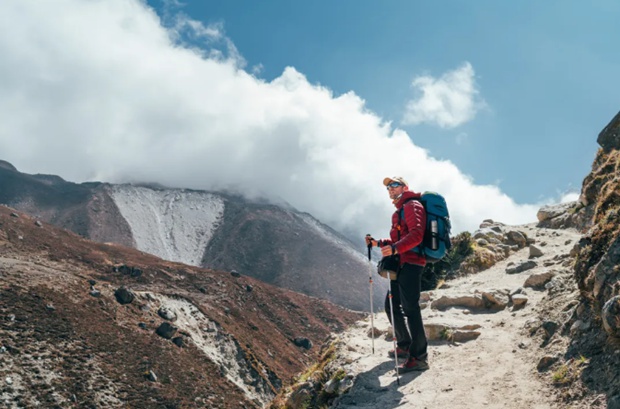
Mountaineers
Its competitive advantages are reflected in the following key features:
Community participation:
Build multi-level governance mechanisms, strengthen partnerships, and promote in-depth community participation; address the challenge of population decline in mountainous areas by formulating, implementing, and monitoring pilot plans; ensure that local residents have substantial participation rights in tourism policy formulation and destination planning, and finally achieve the harmony between the interests of tourists and the well-being of residents.
Cultural protection:
Work with local residents to explore vivid traditional crafts and folk stories, so that every display becomes a relay of culture.
Product authenticity:
Provide real experiences that reflect local lifestyles and traditions, and innovate and develop year-round tourism products.
Customization:
Personalized and unique tourist experiences can attract more tourists and increase revisit rates. Develop professional tourism products for specific interests and use local festivals to attract cultural lovers.
Technology empowerment:
The digital age has given birth to digital tourists. Decisions should be made based on big data analysis, and digital means such as artificial intelligence should be used to achieve market insight, product research and development, and customer reach. Specifically, it includes: developing self-guided tour APPs and trail safety early warning systems; using Geographic Information System (GIS) mapping to optimize route management and disaster prevention; integrating Augmented Reality (AR)/Virtual Reality (VR) experience technologies to enhance the interpretation experience of historical and natural landscapes.
Economic benefits:
Tourism products targeting segmented markets can create higher returns by attracting specific customer groups.
Infrastructure and capacity building:
Invest in infrastructure that supports customized tourism experiences, such as eco-lodges, green buildings using local materials, electric shuttles or cable cars driven by clean energy, cultural centers, and adventure trails. Provide training and capacity-building programs for local residents to ensure the supply of high-quality services.
Sustainable development:
In view of the ecological fragility, cultural uniqueness, and economic limitations of mountainous areas, it is necessary to establish a development paradigm that prioritizes resource protection.
When tourism development is deeply in line with the local environment, the effectiveness of implementing sustainable measures will be significantly improved. Implement environmental protection measures and advocate responsible tourism behavior. Sustainable development has changed from an option to a must, and tourism sustainable development can no longer be regarded as an alternative.
We must reconstruct the tourism ecosystem to build a more sustainable and resilient development paradigm, and at the same time implement a forward-looking sustainable tourism roadmap through a multi-stakeholder collaboration mechanism. Contemporary tourists not only highly favor tourist destinations that practice sustainable development but also have an increasingly mature understanding of their environmental footprint.
Sustainable tourist destinations need to integrate the efforts of all stakeholders:
- Tourists: pursue the authenticity of experience and a sense of value, and yearn for high-quality experience scenarios.
- Local communities: create employment opportunities, enhance national pride, and build more livable homes.
- Tourism enterprises: while pursuing profits and long-term development, need to pay attention to employee motivation and satisfaction.
- Natural and cultural environments: need to establish a scientific and complete protection-inheritance-interpretation system.
In this regard, we should also include local, regional, and national governments in consideration to ensure regular assessment of the impact of tourism on mountainous areas, effective management of waste and resources, formulation of clearer definitions and management norms for the environmental carrying capacity of tourist destinations, and enhancement of environmental awareness of mountain tourists, thereby promoting the sustainable development of mountain tourism destinations. Developing sustainable tourism in mountainous areas needs to reduce its negative impact on the environment and society and cope with the challenges brought by climate change.
It is well known that the tourism industry as a whole is highly sensitive to climate, and mountain tourism destinations are particularly affected by climate change. However, the tourism industry accounts for about 8% of total greenhouse gas emissions, of which air transport accounts for 40%, car transport 32%, and accommodation 21%. In terms of air transport, the International Air Transport Association (IATA) has set a goal of achieving net-zero carbon emissions by 2050 through sustainable aviation fuel (SAF). The impact of climate change on specific destinations will definitely change the distribution of tourist flows, thereby affecting tourists' travel choices. In terms of climate change, it is too late to learn from past experience - the damage has already been done by then.
We must promote the formulation and implementation of forward-looking tourism policies to strengthen the role of mountain tourism in climate action and ensure that the industry keeps up with the pace of rapid technological development. Currently, the demand for comprehensive and interdisciplinary climate change education is more urgent than ever before.
Finally, I would like to conclude with a classic case from my own experience - a trip across the Andes between Chile and Argentina. This route can be called a model of mountain tourism, which accurately responds to the in-depth demands of contemporary travelers for unique experiences.
Source: IMTA
Editor Ⅰ: Zhang Wenwen
Editor Ⅱ: Bao Gang
Editor Ⅲ: Liu Guosong