


On May 29, the"International Mountain Tourism Day 2025" Theme Events kicked off on Gran Canaria, Spain. With the theme "Embracing Mountains and Seas, Coexisting with Cultures — Mountain Tourism and Cultural Inclusiveness for the Future," the event brought together representatives from international organizations, government officials, industry leaders, experts, scholars, and media worldwide to explore inclusive collaboration and shared development in global mountain tourism. The program included an opening ceremony, thematic forums, mountain cultural exchange sessions, a China-Spain cultural tourism exhibition, and the "Gran Canaria Night" welcome dinner. Participants engaged in diverse formats to share advanced concepts, discuss cutting-edge issues, and deepen practical cooperation. At the opening ceremony, Mr. Dominique de Villepin, Chairman of the IMTA, delivered a speech.
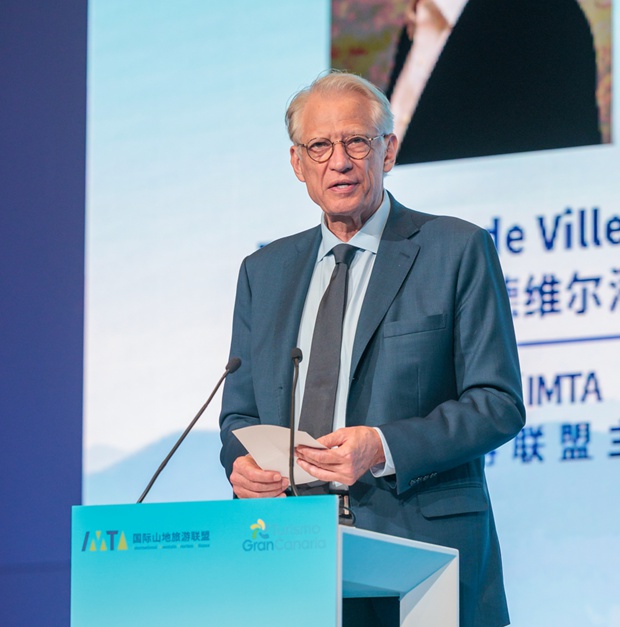
Full text of the address:
It is a great pleasure to gather with you all on this special day on Gran Canaria, the "Island of Eternal Spring" in the mid-Atlantic, to celebrate the seventh International Mountain Tourism Day. Since the International Mountain Tourism Alliance (IMTA) initiated the establishment of International Mountain Tourism Day in 2018, themed activities have been continuously held in Nepal, China, Laos, France, and Spain, responding to the trends of our times with distinctive themes and innovative formats. International Mountain Tourism Day has become an important platform for showcasing the diverse values of mountains, enhancing industry exchanges, and promoting international cooperation.
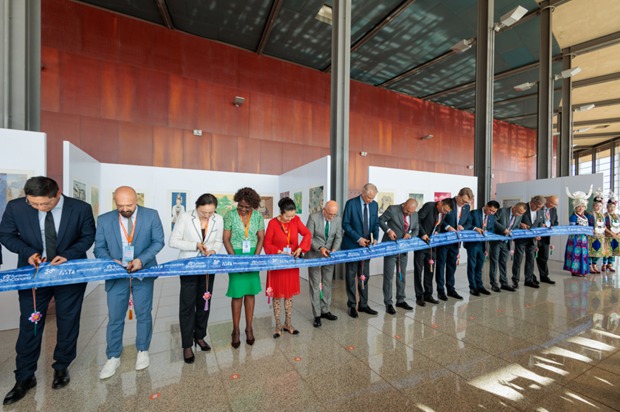
Ribbon-cutting Ceremony for the China-Spain Cultural and Tourism Exchange Exhibition
Last year, under the theme "Mutual Understanding among People through Mountain Tourism," we held a unique celebration in Nice, France, contributing to mutual learning between Chinese and French civilizations and driving innovation in mountain tourism. This year coincides with the 50th anniversary of China-EU diplomatic relations and the 20th anniversary of the China-Spain comprehensive strategic partnership. This grand event spanning mountains and seas will carry forward the concept of "civilizations exchanges and mutual learning," pooling the wisdom and experience of industry leaders to become a powerful practice in promoting cultural inclusivity and people-to-people bonds between China and Europe.
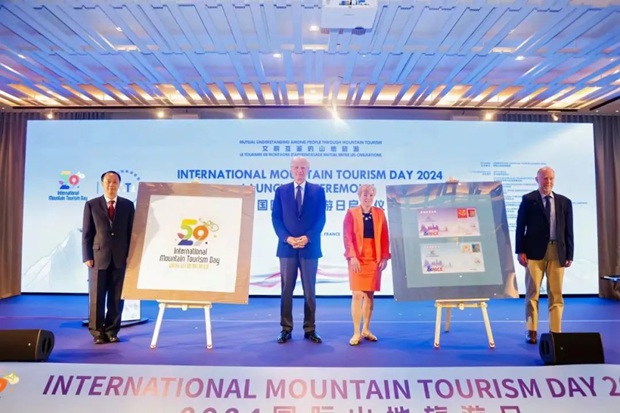
Opening Ceremony of the 2024 International Mountain Tourism Day
The global tourism industry is undergoing profound transformation and reshaping. Market data indicates a continuous rebound in international tourist arrivals, with per capita tourism spending in 2024 having recovered to pre-pandemic levels. Europe, leveraging its mature tourism infrastructure and multicultural appeal, leads the recovery. Emerging markets in Asia and the Middle East are becoming new growth poles with remarkable growth rates. However, regional recovery remains uneven, and the path forward is not without challenges: sluggish global economic growth, geopolitical conflicts, climate change, and energy crises continue to test the tourism industry's resilience.
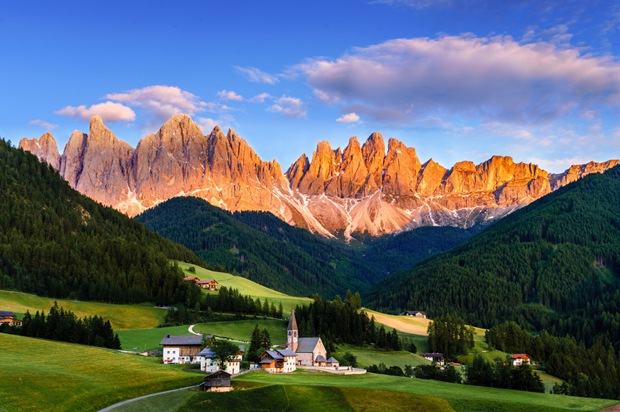
Dolomites, Italy
Against a backdrop of increasing uncertainties, achieving more balanced and sustainable development for the industry is a key focus for all stakeholders. As tourism market demands evolve, mountain tourism has quietly "grown" into a crucial engine for promoting balanced regional economic development and a bridge for building new types of international relations. Mountain ecosystems support terrestrial biodiversity and nurture rich cultural forms, serving as a living gene bank of human civilizational diversity. When we discuss the development of mountain tourism, we are essentially discussing how to protect the ecological foundation of our planet and how to preserve humanity's spiritual heritage—a responsibility towards nature and a shared obligation for all nations within the global governance framework.
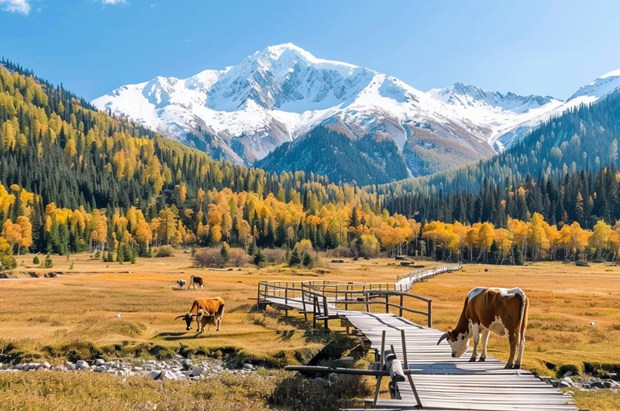
Altay, Xinjiang, China
As this year's theme states, "Mountains Embrace Seas, Humanity Coexists—Mountain Tourism and Future-Oriented Cultural Inclusivity," it reveals a fundamental truth: only by respecting diversity and embracing differences can we achieve sustainable development in tourism.
The future development of mountain tourism requires establishing a paradigm centered on resilience, inclusivity, and sustainability:
1. Enhancing Resilience: Through cross-regional collaboration to share resources and risks, we can improve overall shock resistance and systemic resilience. For example, the France-Spain joint Pyrenees Ecological Compensation Mechanism provides a model for cross-border ecological governance.
2. Promoting Inclusive Development: Institutional designs should ensure local communities have substantive voices in economic benefits, cultural preservation, and decision-making, allowing tourism development gains to benefit more groups. We advocate for establishing a "host-guest shared value distribution system." Initiatives like the "Indigenous Cultural Mentor Program" at Machu Picchu, Peru, have significantly increased local communities' share of tourism revenue.
3. Redefining Success: Mountain tourism development redefines the standards of "success," shifting the model from extensive growth to quality-oriented development. It prioritizes creating high-quality experiences based on protecting natural and cultural heritage, moving beyond tourist numbers as the sole metric. Greater emphasis is placed on visitor experience quality, local community well-being, and the protection of natural and cultural assets.
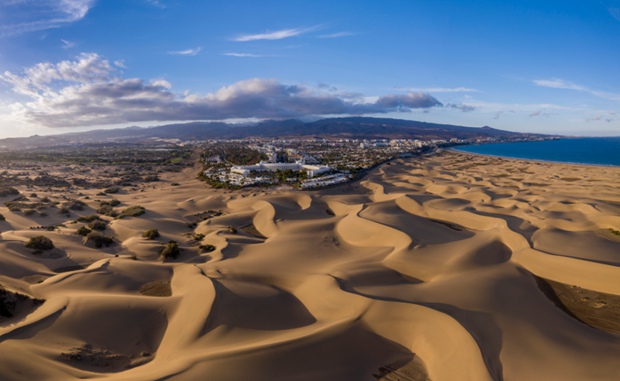
Scenery of Gran Canaria, Source: Spain’s Gran Canaria Tourism Department
Friends, as we stand on this land connecting mountains and seas, the peaks and oceans before us are not only precious gifts from nature but also mirrors reflecting human civilization. The value of mountain tourism extends far beyond the scenery itself. It lies in maintaining reverence for nature, respect for culture, and responsibility for the future amidst development—making mountains a bridge connecting people and a vivid classroom for civilizations to learn from each other.
Source: IMTA
Editor Ⅰ: Zhang Wenwen
Editor Ⅱ: Bao Gang
Editor Ⅲ: Liu Guosong